1 Chisholm Trail Rd, Suite 450, Round Rock, TX 78681

Austin, TX Foundation Repair Contractors

At Dura Pier of Austin, we deliver precise foundation repair, concrete lifting, sewer line repair and drainage solutions tailored to Austin’s unique soil and climate. Supported by our proprietary Dura LockĀ® piling system and a true lifetime transferable warranty, we deliver long-term foundation performance with total transparency.

Request a Free Estimate

Start with a free, no-obligation evaluation from one of our local experts.

"*" indicates required fields

This field is for validation purposes and should be left unchanged.
Name*
Address*
*By submitting this form and signing up for texts, you agree to receive informational messages (appointment reminders, account notifications, etc.) from Dura Pier Foundation Repair at the number provided. Msg & data rates may apply. Msg frequency varies. Unsubscribe anytime by replying STOP. Reply HELP for help or email us at [email protected]. Learn more on our Privacy Policy and Terms & Conditions page.

Expert Foundation Repair Services for Austin Homes & Businesses

Foundation conditions in this city change dramatically over short distances. Out east, the Blackland Prairie carries deep clay soils weathered from calcareous shale, including the Houston Black and Heiden series, both rated high for shrink and swell. Head west and the ground climbs the Balcones Escarpment into the Hill Country, where interbedded limestone and marl of the Glen Rose and Edwards formations sit under just a few inches of soil. Between the two runs the fault zone itself, several miles wide, where limestone and clay units are broken and interleaved. A house there can sit on rock at one corner and clay at the other. We start every project with an objective elevation assessment for exactly that reason, because on this terrain the readings, not the cracks, tell you what is actually happening.

Service Area

Serving Austin, Texas and the surrounding areas

With offices in major Texas cities, we’re never far when you need us. Each market has specialists who understand local soil and structural challenges.

Austin Service Area

Why Austin Homeowners Choose Dura Pier

Property owners across Central Texas trust Dura Pier because we focus on root-cause structural engineering rather than superficial fixes. For over four decades, our family-owned organization has specialized in resolving complex soil movement issues across Texas. Across four decades and more than 45,000 foundations statewide, we have built our methods around Texas soil rather than around whatever pier system a supplier is selling. In Central Texas that means crews who have worked both sides of the escarpment, from Blackland clay in Manor and Taylor to limestone lots in Lakeway and Bee Cave.

Working with Dura Pier means partnering with specialists who value structural accuracy, honest recommendations, and long-term asset protection. We prioritize solutions that preserve your property’s structural safety, interior finishes, and market value for generations.


What Sets Us Apart:

  • Dura LockĀ® Technology – our exclusive piling system designed for Texas conditions
  • Lifetime Transferable Warranty – no fine print, no fees, and it stays with the home
  • 45+ Years of Experience – trusted, third-generation foundation repair experts
  • Professional Cleanup & Care – crews protect your yard, landscaping, and interior
  • Flexible Financing – 0% interest and affordable payment plans available

We don’t cut corners. We don’t use scare tactics. We earn your trust through expert work and neighborly care.

Foundation Repair in Austin

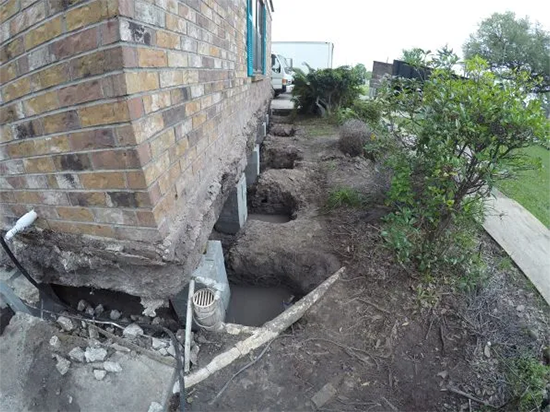
Securing permanent foundation repair in Austin requires an approach tailored to the area’s expansive clay layers and underlying rock formations. As soil moisture levels fluctuate throughout the year, differential movement forces concrete slabs and floor joists out of alignment, causing interior sheetrock cracks, binding doors, and exterior brick separation.

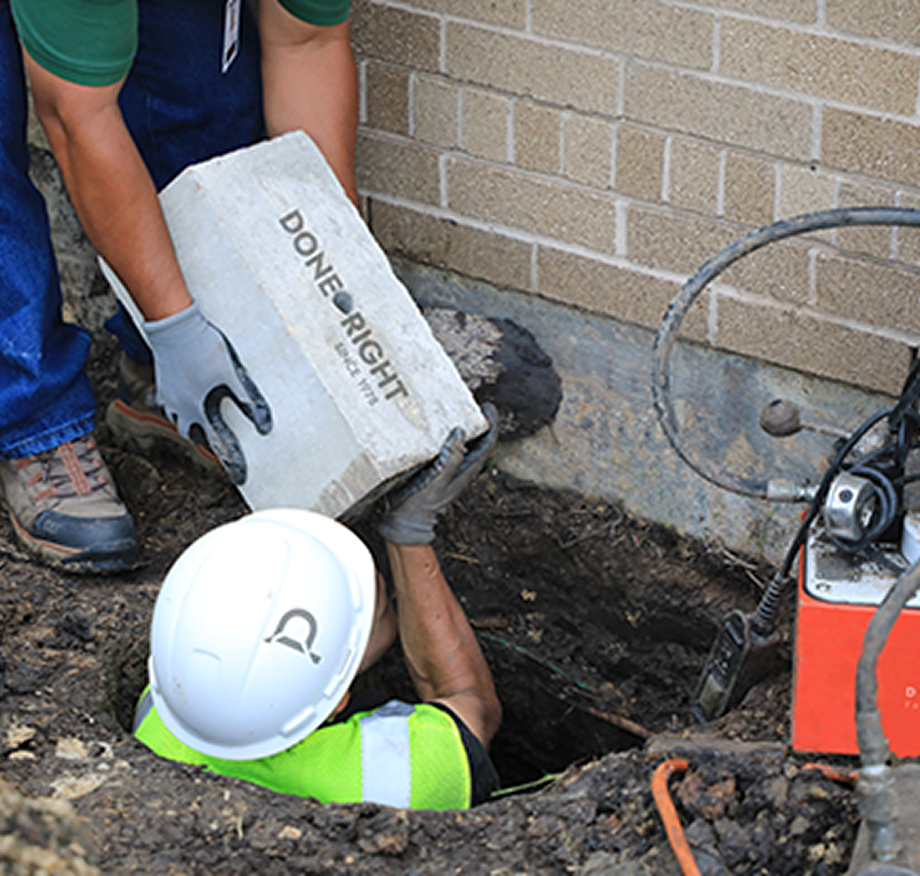
  • Targeted Dura LockĀ® Piering: We drive heavy-gauge steel shafts or interlocking concrete piers through volatile upper clays until reaching stable load-bearing strata or solid bedrock.
  • Synchronized Hydraulic Lifting: Multi-point hydraulic jacking systems carefully raise settled sections of your slab or subfloor back toward its original position.
  • Versatile Structural Solutions: Custom repair plans engineered specifically for both concrete slab foundations and elevated pier-and-beam crawlspaces.
  • Comprehensive Movement Correction: Permanent stabilization for sagging floors, perimeter settlement, and structural shearing.
  • Lifetime Transferable Warranty: Major structural repair installations are backed by a transferable warranty that protects your property’s resale value.
Foundation Settlement Repair

Concrete Lifting in Austin

When ground movement causes outdoor slabs to sink and tilt, our concrete lifting in Austin delivers a clean, cost-effective alternative to complete demolition and re-pouring. Soil erosion, washouts, and clay shrinkage frequently leave voids beneath driveways, walkways, entry steps, and pool decks, creating tripping hazards and directing rainwater straight toward your home’s perimeter.

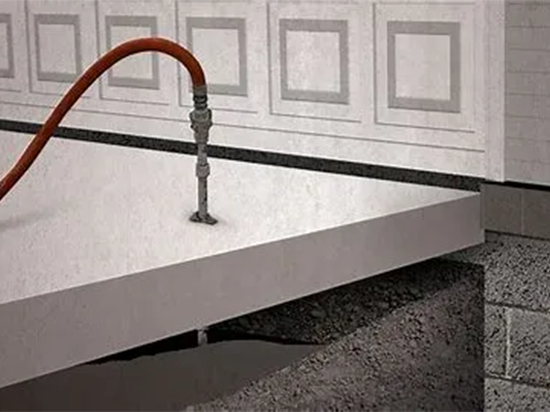
  • High-Density Polyurethane Polyjacking: We inject specialized, expanding eco-friendly polymer foam beneath the sunken slab to raise it smoothly back into alignment.
  • Minimal Property Disruption: Micro-drilled entry holes leave your concrete looking clean, eliminating the mess and noise of major removal equipment.
  • Corrected Surface Drainage: Restores the proper outward pitch away from your home, preventing rainwater from pooling against your grade beams.
  • Multi-Surface Applications: Ideal for realigning sunken driveways, public walkways, outdoor patios, garage floors, and pool surrounds.
  • Rapid Load-Bearing Recovery: The high-density polymer cures within minutes, allowing immediate foot and vehicle traffic the same day.

Sewer Line Repair in Austin

When underground drainage lines breach, conducting prompt sewer line repair in Austin is vital to prevent ongoing foundation movement. Escaping wastewater beneath a concrete slab continuously saturates the surrounding clay soil, causing localized upheaval or washing away supporting soil, which leads to severe slab settlement.

  • High-Definition Fiber-Optic Camera Testing: Precision video diagnostic inspections locate exact pipe fractures, separations, and subterranean root blockages.
  • Subterranean Tunneling Capabilities: Experienced crews excavate horizontal access channels beneath your slab, allowing pipe replacement without jackhammering through interior flooring.
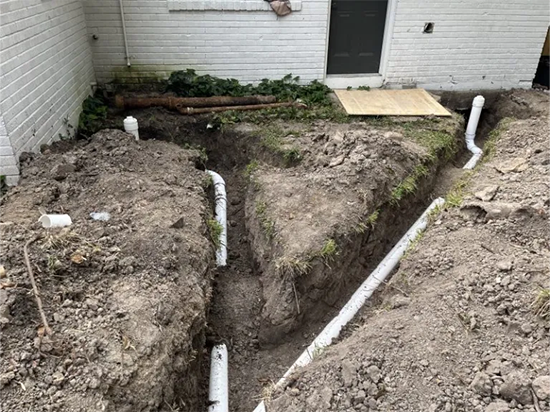
  • Heavy-Duty Schedule 40 PVC Replacement: Corroded cast iron or crushed piping is replaced with commercial-grade PVC built to resist soil pressure and root invasion.
  • Sub-Slab Soil Remediation: Void filling and soil stabilization techniques restore firm contact beneath the slab after plumbing leaks are resolved.
  • Coordinated Plumbing & Structural Restoration: Integrated service execution ensures both the plumbing line and any resulting foundation settlement are fixed simultaneously.

Drainage Solutions in Austin

The Hill Country produces some of the worst flash flooding in the United States, and Austin has been on the receiving end of it since before the first Tom Miller Dam washed out in 1900. Rain that falls on thin soil over limestone does not soak in. It runs, fast, and it collects at whatever low point it finds. On the prairie side of town the problem inverts: clay takes water quickly when it is cracked open and almost refuses it once saturated, so a storm arriving on wet ground pools against the slab instead of draining. Drainage work is structural work in both halves of this city.

  • Subsurface French Drain Systems: Perforated pipe networks wrapped in geotextile filter fabric collect subterranean groundwater and divert it away from your home.
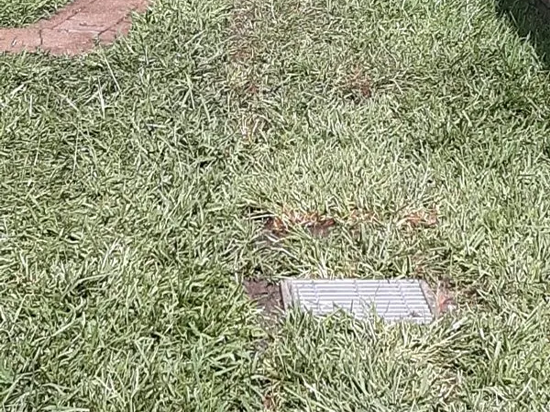
  • Surface Catch Basins & Channel Drains: Strategic surface drains intercept heavy downspout discharge and sheet flow before water accumulates near the foundation.
  • Custom Yard Regrading: Precision land contouring establishes a positive slope, guiding surface runoff naturally toward municipal drainage outlets.
  • Underground Downspout Routing: Solid PVC drainage lines capture roof runoff from gutters and discharge it safely at a distance from the building.
  • Comprehensive Moisture Control Plans: Multi-component water management systems tailored to your lot’s specific slope, soil type, and landscaping layout.

The Technology Behind Stronger Foundations

Most foundation repairs rely on generic pier systems.
Dura LockĀ® is different.

Standard pier systems frequently underperform in Austin’s reactive clays. Our proprietary Dura LockĀ® and Dura Lock XDĀ® systems feature bolted segments driven and tensioned for superior grip, alignment, and long-term resistance to both downward settlement and upward heave.

Key advantages include deeper penetration, stronger inter-segment connections, efficient installation, and permanent performance backed by our lifetime transferable warranty. This technology reflects decades of refinement specifically for Texas soils.

Austin Foundation Repair FAQs

Why do Austin Foundations Move?
The Balcones Fault Zone
Robert T. Hill described the Balcones Escarpment in 1890. It marks the boundary between the Coastal Plain and the Edwards Plateau, and it runs straight through this city. Total displacement across the fault zone near Austin is roughly 1,000 feet, with the faults dropping down toward the east. That is why the eastern half of town is flat prairie and the western half is hills. It is also why two Austin homeowners with identical cracks can need completely different repairs.
East of the Fault: Deep Clay
The Blackland Prairie soils here formed on Cretaceous shales, and the ones that matter for foundations are Houston Black and Heiden. Both carry high shrink-swell potential. They open cracks in a dry summer and swell shut when the rain returns, and a slab caught over that cycle lifts on one side while the other holds. Beneath those soils sit the Austin Chalk and Taylor Clay. Pilings here have to reach past the layer that keeps moving, and that depth is set by resistance rather than by a number chosen in advance.
Inside the Fault Zone: Clay and Rock Together
Central Austin sits in the zone itself, where the Edwards, Georgetown and Buda limestones are complexly faulted against the Del Rio Clay and the Eagle Ford. Del Rio is about 80 feet thick at Austin and it is a genuinely expansive unit. What makes this area difficult is not that the ground is bad but that it is inconsistent. Refusal depth can vary by several feet across a single lot, so pier placement and depth get decided from readings and field resistance, not from a template.
West of the Fault: Thin Soil Over Limestone
Hill Country lots are the opposite problem. There is very little soil, and rock is often within a few feet of the surface. Slabs here rarely heave from clay movement. What they do instead is settle where fill was placed to level a sloped building pad, or move where water has found a path through fractured limestone. Drainage and lot grading carry more weight in this half of the city than piering depth does.

Measurement settles it. New construction does settle in its first year or two, and hairline shrinkage cracks in a slab are ordinary. Movement that keeps going shows a pattern: cracks widening over months, doors that shift with the seasons, and elevation readings that vary across the floor beyond construction tolerance. One set of readings gives you a baseline. Two sets, months apart, give you an answer.

It changes the diagnosis substantially. East of the escarpment, deep Blackland clay lifts and drops a slab repeatedly with the seasons. West of it, thin soil over limestone means movement usually traces to placed fill on a sloped lot or to water moving through fractured rock. Same symptoms upstairs, and two different
repair plans underneath.

Pier count, depth to firm bearing and any drainage scope drive the number. Across Central Texas, moderate residential repairs commonly land in the low-to-mid thousands, with whole-house corrections and drainage running considerably higher. Depth is the largest variable here because it differs so much across the city. Only an on-site evaluation with elevation readings produces a real figure, and ours is free.

A typical Austin single-family pier job runs a few days of active work. Older raised-foundation homes take longer because the lifting is staged in small increments. Tunneling and combined drainage scopes extend it further. Add scheduling, any required permit and the post-lift plumbing test, and the calendar window is wider than the working days. You get a date range in writing before we start.

Not on every job. In Texas a licensed professional engineer is the party authorized to issue an engineering evaluation of a structure, and a contractor is not. That report is worth commissioning when movement is severe, when a lender or insurer requires it, or when you want an assessment from someone with no financial
stake in the repair. We work from engineer plans regularly.

Yes, and often the piers are shorter. On Hill Country lots refusal can come within a few feet rather than fifteen, which changes the method and sometimes the price. What matters more on those properties is what is happening in the fill placed to level the building pad, and where water is travelling once it hits the rock.

Yes, and consistency beats volume. The goal is keeping soil moisture steady around the perimeter so clay never fully opens on one side of the house while the other stays damp. A soaker hose set back about a foot from the slab, run on a timer, does more good than an occasional deep soaking. Treat it as maintenance, not repair.

Rarely, when soil movement is the cause. Texas policies generally respond to sudden and accidental damage, and gradual settlement from clay shrink-swell is usually classified as maintenance. A sudden under-slab plumbing leak is sometimes handled differently. Read your exclusions and speak to your carrier before assuming coverage either way.

What Our Customers Are Saying

Recognized for Service, Trusted by Homeowners

Scroll to Top