COMMERCIAL SERVICES

Commercial Foundation Repair

Commercial Foundation Repair Services in Texas

Structural movement in a commercial building is a different problem from movement in a house. The building is bigger, the loads are heavier, and there are usually people inside it who cannot simply be sent home for three days.

Dura Pier has been repairing foundations in Texas for over 45 years, across Houston, Dallas, Fort Worth, Austin and San Antonio. We work on office buildings, retail centers, warehouses, distribution facilities, restaurants, medical and dental offices, churches, schools, apartment complexes and light industrial buildings.

Every commercial project starts with a structural evaluation and floor elevation readings across the affected area. Those numbers determine the pier count, the pier placement and the lift sequence. From there we build a scope that works around how your building actually operates, including after-hours and phased scheduling where the work would otherwise interrupt tenants or production.

Our proprietary Dura Lock XD® piling system carries a lifetime transferable warranty, which matters more on commercial property than residential because it survives a sale of the asset.
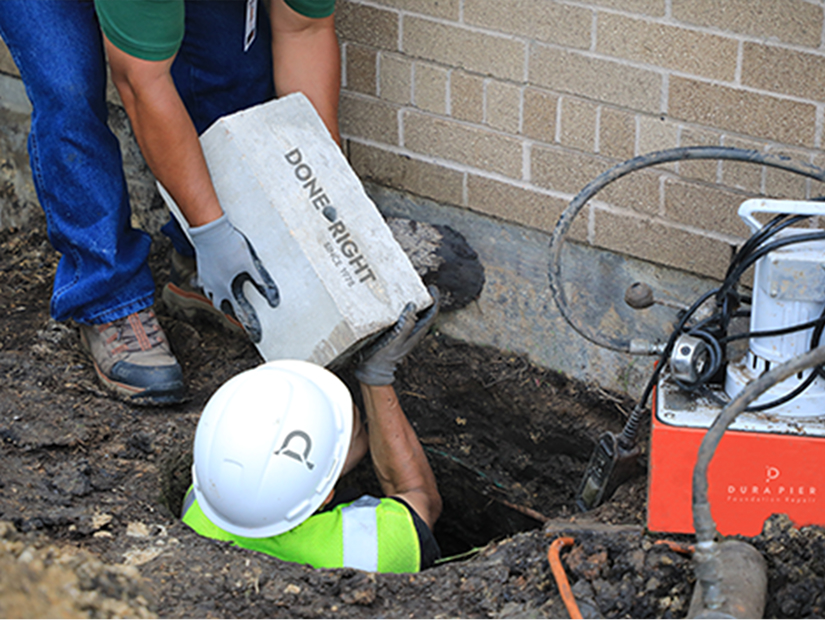
Our Commercial Foundation Services

Foundation problems in a commercial building rarely announce themselves all at once. They show up as doors that stop latching, cracks tracking across a wall over several months, floors that develop a noticeable slope, or a section of parking lot that keeps collecting water after rain.

Catching movement early is the difference between a contained repair and a project that involves plumbing, interior finishes and lost operating days. If your maintenance team or tenants have flagged any of those signs, an evaluation costs you nothing and gives you a documented baseline either way.

Foundation piering and underpinning systems

Dura Lock XD® pilings driven to firm bearing, with pier count and placement set by elevation readings and structural load.

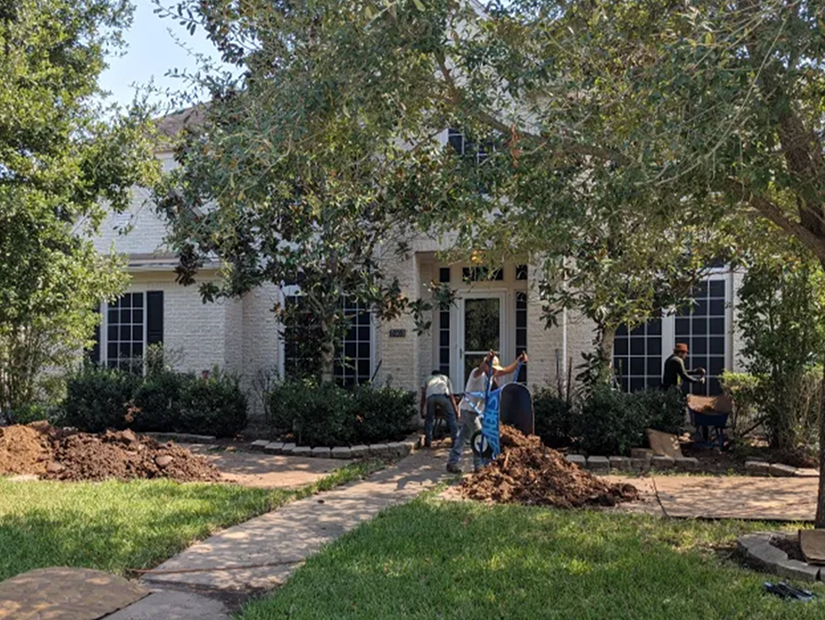
Sunken parking areas, loading docks, walkways and warehouse floors lifted and re-supported without demolition.

Grading, French drains, catch basins and downspout routing to stop water collecting against the building.

Camera inspection, hydrostatic testing and replacement of failed lines beneath the slab.

Access to under-slab plumbing from outside the building, so interior flooring and operations stay intact.

Barriers installed to stop mature tree roots drawing moisture from soil under the building perimeter.

What Makes Commercial Work Different

Load and pier design. A commercial slab carries far more weight than a house, and that weight is distributed differently. Pier spacing and capacity get calculated against actual structural loads, not a residential rule of thumb.

Working around an operating business. Most of our commercial jobs happen while the building stays open. That means phasing the work by section, scheduling loud or disruptive stages outside business hours, and keeping access routes and parking usable throughout.

Engineer coordination. Many commercial projects involve a structural engineer, either yours or one you engage independently. We work from engineer-specified plans routinely and provide the elevation data those reports depend on.

Documentation. Commercial owners and property managers need a paper trail for capital planning, insurance and disclosure at sale. You get elevation readings, a repair plan, line-item pricing and the warranty in writing.

Tenant and liability considerations. Occupied space needs a different approach than vacant space. We walk the site with you before scoping to identify what has to stay accessible and what can be closed off.

Dallas Commercial Foundation Repair Contractors

Commercial Foundation Repair FAQs

Can the work be done while our building stays open?

In most cases yes. We phase commercial jobs by section and schedule the loud or disruptive stages outside business hours where needed. Perimeter pier work rarely affects the interior at all. Interior piers and tunneling need more planning, and we walk the site with you beforehand to agree what stays accessible.

It depends on pier count, building size and how much of the work has to happen after hours. A contained perimeter job can be a matter of days. Large or phased projects run longer. We give you a written schedule before starting, including which sections are affected when.

Often, and for commercial work more often than residential. In Texas only a licensed professional engineer can issue an engineering evaluation of a structure. Lenders, insurers and buyers frequently require one on commercial property. We work from engineer-specified plans regularly and supply the elevation data those reports rely on.

Structural foundation work generally requires a permit, and requirements vary by jurisdiction across the metros we serve. We handle permitting as part of the project rather than leaving it with you.

Usually not when soil movement is the cause. Most policies respond to sudden and accidental damage, and gradual settlement from expansive clay is typically treated as maintenance. A sudden under-slab plumbing failure is sometimes handled differently. Check your policy language before assuming coverage.

Yes. If you manage a portfolio, we can evaluate several properties on one schedule and give you a prioritized plan showing which need attention now and which can be planned into a later capital cycle.

Yes. Our Dura Lock XD® warranty is lifetime and transfers to the next owner with no fee. On commercial property that matters at disposition, because it converts a disclosed repair into documented evidence the issue was addressed.

Too variable to quote meaningfully in advance. Building size, pier count, depth to firm bearing, interior versus perimeter access and any drainage or plumbing scope all move the number, and commercial buildings vary far more than houses. The evaluation is free and produces line-item pricing.

Schedule a Commercial Evaluation

Our commercial evaluation includes floor elevation readings across the affected area, an assessment of drainage and site conditions, a pier plan if one is warranted, and line-item pricing. If the readings do not support doing work yet, we will tell you that and give you the data to re-measure against later.
Scroll to Top