Drainage Solutions for Your Home and Foundation

Water standing against your foundation is the most common cause of foundation problems in Texas, and it is also the cheapest one to fix.

Texas clay swells when it takes on water and shrinks when it dries. Keep the soil around your house evenly moist and that movement stays manageable. Let water pool on one side while the other bakes dry, and the difference is what cracks brick and jams doors.

Most drainage problems are solvable in a day or two for a fraction of what foundation repair costs. That is why we look at drainage on every evaluation, whether or not you need piers.

How Bad Drainage Damages a Foundation

It is not the water itself. It is the difference in moisture from one part of your lot to another.

Wet soil swells and pushes up. Dry soil shrinks and pulls away. When one side of your house sits in saturated ground and the other side is dried out, your slab is being lifted on one edge and dropped on the other at the same time.

Texas clay makes it worse. When it is cracked open after a dry spell it takes water fast, funneling it straight down alongside your foundation. Once saturated it will barely take any at all, so the next storm runs off and pools at the lowest point. On a flat lot that low point is frequently the slab edge.

It compounds. Saturated soil next to a foundation can also carry water under the slab, keep a crawl space damp enough to rot framing, and put standing water against brick and siding.

The cycle is what does the damage, and the cycle is driven by where water goes. That is something you can actually control.

Complete Drainage Solutions

What We Install

Grading correction. The first thing we look at. Soil should fall away from your foundation for the first several feet. Over time landscaping, settling and mulch beds reverse that slope without anyone noticing. Sometimes correcting the grade is the entire fix.

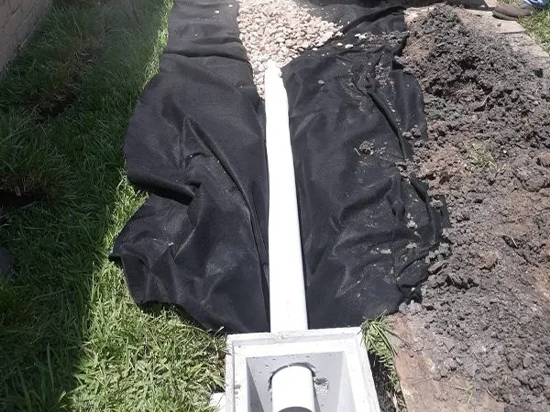
French drains. A perforated pipe in a gravel-filled trench, wrapped in filter fabric, that collects subsurface water and carries it away. The detail that matters is fall at the invert. A French drain without consistent slope holds water instead of moving it, which is worse than no drain at all. We use perforated schedule 40 pipe, washed rock and proper liner rather than a sock pipe dropped in a ditch.

Surface drains and catch basins. For yards with a genuine low spot that collects standing water. Basins get sized to the area they actually serve, not to whatever grate was on the truck.

Downspout extensions and burial. Your roof concentrates a huge volume of water into a handful of points. A downspout dumping next to the foundation is one of the most common causes of localized movement, and one of the easiest things to fix.

Sump systems. Where a yard genuinely has nowhere to send water by gravity, a pump moves it.

Swales and regrading. For lots where water arrives from a neighbor’s property or from uphill, intercepting it before it reaches your foundation is more effective than managing it once it is there.

We size and design the system for your lot. There is no standard package, because no two properties shed water the same way.
Signs You Have a Drainage Problem

  • Water standing in the yard more than a day after rain. On clay, some pooling is normal. Standing water that lasts is not.
  • Mud or erosion along the foundation. Tells you where water is concentrating.
  • Downspouts discharging within a few feet of the house. Extremely common and easy to miss.
  • Soil or mulch sloping toward the house. Walk the perimeter and look at which way the ground falls.
  • A damp or musty crawl space. Usually a drainage problem before it is a ventilation problem.
  • Cracks that appear or widen after heavy rain. A direct signal that water is moving soil next to your foundation.
  • Green, spongy patches of lawn that never dry out. Sometimes drainage, sometimes a plumbing leak. Worth telling apart.
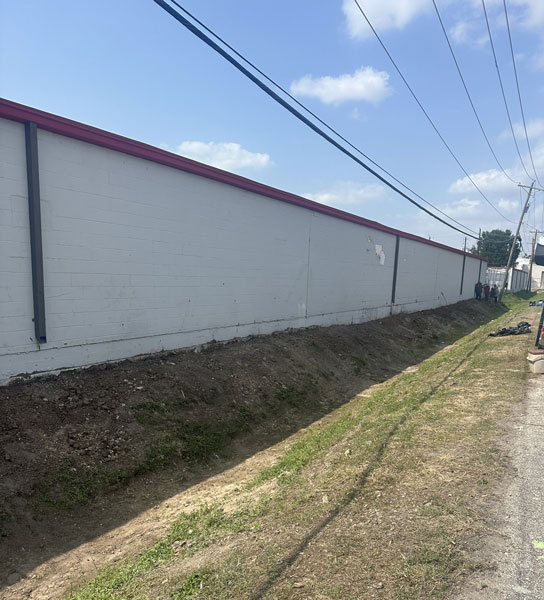
Solving Yard Grading Problems

Drainage Before Piers, or Piers Before Drainage?

A fair question, and the answer depends on what the elevation readings show.

If the house has already lost support, piers come first. Drainage will not lift a slab that has dropped. It only stops the cause from continuing.

If movement is early and driven entirely by water collecting where it should not, correcting drainage sometimes stabilises things without piers at all. That is a much smaller invoice and we would rather tell you that when it is true.

Most of the time it is both, done together. Piers stabilise what has already moved. Drainage stops the thing that moved it. Doing only the first means paying twice, because the soil keeps cycling and the untreated sections keep going.

What we will not do is sell you drainage as a substitute for a structural repair your house actually needs, or piers without mentioning that your downspouts are emptying onto the foundation.

Schedule a Free Drainage Evaluation

Schedule your free, no-obligation drainage inspection. We will walk the property, find where water is going, and tell you what it would take to move it somewhere better.

Drainage FAQs

How much does a drainage system cost?

Far less than foundation repair, which is the point. Cost depends on how much pipe, how many collection points and how difficult the discharge is. A downspout extension and some regrading is a modest job. A full French drain system around a large lot with a sump is a larger one. We price by line item so you can stage the work if you want to.

It will not lift a foundation that has already settled. What it does is stop the soil moisture swings that caused the movement, which prevents it getting worse and protects a repair once one is done. If you are told a drain alone will fix an actively settled slab, get a second opinion.

Yes, and you should. Getting roof water four to six feet away from the foundation is genuinely useful and costs almost nothing. It will not solve a grading problem or a lot that collects water from uphill, but it is the easiest win available and we will tell you if that is all you need.

To the street, to a storm drain, to a lower part of your property, or to a sump discharge point. Every lot is different and some have real constraints. If your property has nowhere to send water by gravity, that changes the design, and we work that out before quoting rather than after.

There is disruption. Trenching leaves a visible line across the lawn that takes a season to blend in, and plantings along the route get disturbed. We backfill, restore grade and tell you exactly which path the trench takes before starting so there are no surprises.

Most residential drainage jobs run one to three days. Larger systems and difficult discharge situations take longer. Wet weather delays it, since trenching in saturated clay is both harder and messier.

Not for a typical residential lot. We size systems from the grade, the collection area and where the water can go. Engineered drainage design is worth it on unusual sites, large commercial properties, or where water is arriving from off your property and there may be a dispute about responsibility.

Yes, and you should ask any contractor what theirs covers. Ours is written, and what it does not cover is a system that fails because something downstream changed, such as a neighbor regrading or a city drain backing up. That is worth knowing up front rather than discovering it later.

Affordable Solutions with Flexible Payment Plans

Don’t put off critical repairs. Our team will help you find the right financing plan through trusted local partners so you can get the work you need, when you need it.

Drainage Services Across Texas

Providing expert drainage solutions to areas across the State of Texas:

Scroll to Top