Lakeway, TX Foundation Repair, Concrete Leveling & Drainage

Lakeway sits west of the Balcones Fault, on the Edwards Plateau, where there is very little soil before you reach solid limestone. That makes foundation problems here look nothing like the clay heaving that dominates the rest of Central Texas. Slabs in Lakeway rarely swell. They settle, usually where fill was brought in to level a sloped building pad, or where water has found a path down through fractured rock. Foundation repair in Lakeway, TX has to start by telling those two apart, and Dura Pier uses floor elevation readings to do it.

Lakeway Foundation Repair Services

Building on a hillside means somebody had to make it level first. That decision, made decades ago in some neighborhoods, is often what a foundation problem here traces back to.

Concrete Slab Foundation Repair

Concrete Slab Foundation Repair

Most Lakeway homes are slab-on-grade, many sitting partly on native rock and partly on placed fill. Piers reach refusal quickly on the rock side. See slab foundation repair →

Pier and Beam Foundation Repair

Pier and Beam Foundation Repair

Some hillside homes use raised framing to work with the slope rather than against it. See pier & beam repair →

Concrete Leveling

Long sloped driveways settle in sections and are expensive to replace. Lifting the existing panel usually is not. See concrete lifting →

Pier and Beam Foundation Repair

House Raising

Properties along the Lake Travis shoreline carry exposure worth addressing structurally. See house raising →

Drainage system installation

Drainage Solutions

Water sheets off thin soil fast and collects wherever the grade lets it, often against a downhill foundation wall. See drainage solutions →

Root Barrier Installation Service

Root Barrier Installation

Live oaks and cedar elms send roots a long way through thin soil looking for moisture. See root barrier installation →

Building on a Hillside Creates Its Own Problems

Almost every lot in Lakeway had to be shaped before a house could go on it. Cut into the uphill side, fill on the downhill side, and a flat pad in between. That pad is where most foundation trouble here begins.

The two halves of your house may sit on different things. The uphill portion often rests on native limestone. The downhill portion rests on fill placed to make up the difference. Rock does not compress. Fill does, slowly, under the weight of the structure above it. The result is a house that settles on one side and holds on the other, which reads inside as a tilting floor and diagonal cracks.

Fill settlement does not reverse. This is the important difference from clay country. Clay swells in a wet season and shrinks in a dry one, so a house on clay moves and partly recovers. Fill compacts in one direction and stays there. If your movement only ever goes one way, with no seasonal rebound, that points at the pad rather than the weather.

Water finds paths through limestone that it does not through clay. Fractured rock moves water sideways in ways that are hard to predict from the surface. A drainage problem in Lakeway can originate well uphill of your property.

Piers here are frequently shorter than in the clay markets, because refusal comes sooner. What takes the time is working out which parts of the house are on what.


Early Signs of Foundation Movement in Lakeway Homes

  • Doors that stopped closing and never started again. One-directional change without seasonal recovery points at fill rather than soil moisture.
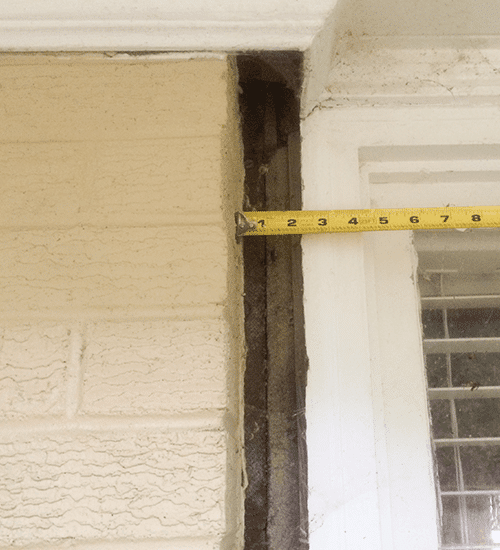
  • Diagonal cracks off door and window corners. An angled crack from a corner means the frame is being racked.
  • A floor that slopes toward the downhill side. Easy to feel in the large open plans common here, and consistent with fill settling on the low side.
  • Stair-stepped cracks in stone or brick veneer. Mortar joints separating in a staircase pattern mean uneven movement along the wall.
  • Cracks appearing after heavy rain rather than during drought. The reverse of the usual clay pattern, and normal in limestone country.
  • Separation where a patio or driveway meets the house. Flatwork on fill often shows the problem before the house does.

What We Do Differently on Hill Country Lots

  • 45+ Years Serving Texas
  • BBB A+ Accredited
  • Highly Trained Technicians
  • Top Grade Materials
  • Best In Class Warranties
  • Financing Available

We map what is under the whole house, not just where the cracks are. On a lot with rock at one corner and fill at the other, refusal depth can vary by several feet across a single foundation. A contractor quoting a fixed pier depth before visiting has not accounted for that, and it is the most common reason a Lakeway repair fails to hold.

We tell you when drainage is the real answer. On a sloped lot, correcting where water travels sometimes stabilizes things without piers. That is a smaller invoice, and we would rather say it than sell you something you do not need. The elevation readings show which situation you are in.

Dura Pier has worked Texas foundations for over 45 years, family-owned across three generations, BBB A+ accredited, with crews trained in-house rather than subcontracted. Learn about Dura Lock XD® →

Areas We Serve Near Lakeway

Lakeway anchors our Lake Travis coverage in western Travis County, and our crews work the surrounding communities on the same schedule.

Foundation Repair FAQs in Lakeway, TX

My lot is mostly rock. Do I even need piers?

Sometimes, and often fewer than you would need in clay country. Where a house sits on native limestone the support is already there. The piers go where the structure crosses onto fill or where a pad has compacted. That is why a Lakeway job can come in below what neighbors in Austin proper paid, or above it if the fill runs deep.

We drive until each pier meets firm resistance rather than to a planned depth. On a graded hillside lot that can be three feet at one corner and considerably more at another. Anyone quoting a set depth before being on site is guessing, and on this terrain the guess is usually wrong.

Usually. Steep driveways, narrow side yards and mature landscaping all slow things down and occasionally change the method. We walk the property before quoting so there are no surprises about access, and we will tell you upfront if the site makes something impractical.

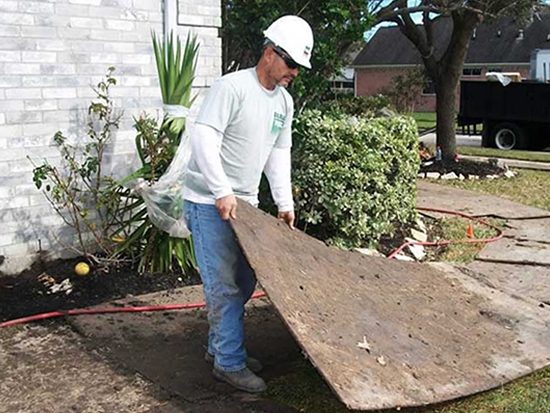
Perimeter pier work means excavation along the beam, so plantings in a narrow band get disturbed and we restore grade afterward. Retaining walls are a separate conversation. If a wall is moving too, that is often part of the same problem, and it is worth looking at together rather than fixing the house and leaving the wall.

At least 30 days after the lift. Unlike clay markets, you do not need to wait through a full seasonal cycle here, because fill settlement does not reverse the way clay movement does. Expect to adjust a few doors during that first month.

Yes. On flat clay lots the job is getting water away from the perimeter. On a hillside it is intercepting water before it arrives, which usually means drains set uphill of the house rather than around it. Where the source is off your property entirely, we intercept at the property line.

Request a Free Foundation Evaluation in Lakeway, TX

You get it on paper before anyone digs: elevation readings across the whole floor, a contour showing the actual shape of the movement, where water travels on your lot, a pier count with placement, and a price for each line. If the numbers do not support work, the report says so and you keep the baseline. For foundation repair in Lakeway, TX, call (512) 229-1585 or request your evaluation online.

Scroll to Top