Richmond, TX Foundation Repair, Concrete Leveling & Drainage
Richmond sits on the Brazos River, which means the ground here changes depending on how close to the river you are. Near the floodplain the surface is river-deposited clay that runs as high as 75 percent clay content. Away from it, you are on Beaumont Formation prairie soils that swell in a wet spring and shrink in a dry summer. Foundation repair in Richmond, TX starts with figuring out which one is under your house. Dura Pier uses floor elevation readings to answer that before recommending anything.
Home » Service Areas » Richmond, TX
Richmond Foundation Repair Services
Richmond’s housing runs from historic homes near the courthouse square to subdivisions built in the last decade. The right repair depends on the era of the house and the ground beneath it.
Concrete Slab Foundation Repair
Most Richmond homes built after 1960 sit on slab-on-grade. Pilings go past the moving layer to firm bearing. See slab foundation repair →
Pier and Beam Foundation Repair
The oldest homes near the historic center predate slab construction and sit on raised wood framing. See pier & beam repair →
Concrete Leveling
Driveways, walks and patios settle separately from the house. Lifting the panel beats replacing it. See concrete lifting →
House Raising
Properties in the Brazos floodplain carry repeat exposure. Raising the structure changes both risk and insurance. See house raising →
Drainage Systems
Flat lots on very slowly permeable clay hold water against the slab for days after the rain stops. See drainage solutions →
Root Barrier Installation
Mature pecans and live oaks draw moisture from the clay your perimeter beam bears on. See root barrier installation →
Why the Ground Under Richmond Behaves the Way It Does
Two things are working on your foundation here, and they are worth separating.
Seasonal clay movement. The prairie soils across most of Fort Bend County are rated very slowly permeable and they swell and shrink with moisture. A dry summer opens cracks in the ground that reach a foot or more down. Rain closes them and the soil pushes upward. Your slab rides that cycle, and it does not ride it evenly across the lot.
Regional ground settling. Decades of groundwater pumping lowered the land surface across this part of the Gulf Coast. The Fort Bend Subsidence District was created in 1989 to regulate it, and its regulatory map has a named Richmond-Rosenberg subarea, which tells you this area was specifically flagged. That settling does not crack an individual slab. What it does is change where water goes across whole neighborhoods, leaving your lot fewer places to send it.
The practical result is that drainage matters more here than most homeowners expect, and it should be part of the repair rather than something you get to later.

Early Signs of Foundation Movement in Richmond Homes
- Doors that bind by season. Sticking in a wet spring and easing in a dry August tracks soil moisture, not humidity.
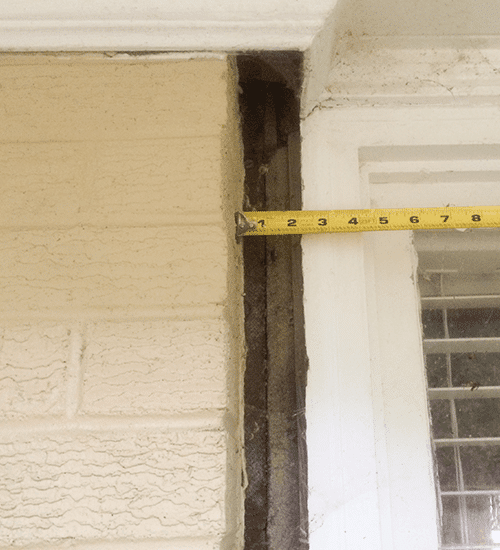
- Stair-stepped cracks in the brick. Mortar joints cracking in a staircase pattern mean uneven movement along the wall.
- Diagonal cracks off door and window corners. An angled crack from a corner means the frame is being racked.
- Floors that slope or feel springy. A ball rolling on its own means support has been lost.
- Soil pulled back from the slab edge. A visible gap after a dry stretch channels water straight down.
- Water standing against the foundation days after rain. On slow-draining clay this is the thing that keeps the cycle going.
Why Richmond Homeowners Choose Dura Pier
- 45+ Years Serving Texas
- BBB A+ Accredited
- Highly Trained Technicians
- Top Grade Materials
- Best In Class Warranties
- Financing Available
Measured, Not Eyeballed. You see the contour map before you see a price. If the readings do not justify work, we say so and you keep the data.
The Dura Lock XD® Piling System. Soil that cycles every year works on the pilings holding your house up. Dura Lock XD® is our proprietary tensioned system, built to hold its position rather than drift. Learn more →
Priced by the Line. Every piling, drain run and barrier priced separately. Warranty runs for the life of the structure and transfers at no cost. See financing options →
Areas We Serve Near Richmond
Richmond is the Fort Bend County seat, and our crews work the surrounding communities on the same schedule.
- Rosenberg
- Sugar Land
- Missouri City
- Katy
- Fulshear
- Needville
- Stafford
- Houston
Foundation Repair FAQs in Richmond, TX
What does foundation repair cost in Richmond?
Most Houston-area jobs land between $3,500 and $10,000, with typical projects around $5,000 to $6,000. Small repairs cost less. Whole-house leveling, interior piers or work that turns up plumbing problems can exceed $15,000. Pier count is the biggest variable and it comes from the elevation readings, not the square footage of the house.
What piers are commonly used in Richmond, and what do you install?
The two most common systems in this market are pressed concrete cylinder piles and steel pressed piles, both driven hydraulically to refusal. Bell-bottom drilled piers show up on older work. We install Dura Lock XD®, our own tensioned segmented system. The difference is that the column is held in tension rather than resting in place, which is what stops it drifting as the clay cycles.
Would foam injection work instead of piers on my house?
For some problems, yes. Structural polyurethane generates enough expansive force to lift a monolithic slab that has dropped over a void, and it is the right tool for driveways, patios and walkways regardless.
What it cannot do is replace a pier on a house that is settling because of seasonal clay movement. Foam works against the soil immediately beneath the slab. In this part of Fort Bend County, that soil is very slowly permeable clay that swells and shrinks every year, so pushing against it is pushing against something that will move again. A pier goes past it.
The exception worth knowing: if a plumbing leak washed material out from under your slab and left a void, that is a foam scenario. We test for that.
How long should I wait to patch drywall cracks after the house is leveled?
Give it at least 30 days, and ideally wait through one wet-to-dry seasonal change. The house continues to settle into its corrected position for several weeks after the lift, and minor movement is normal during that period. Patching too early usually means patching twice. Doors and windows often need adjusting in that window as well.
How long does the work take?
Most single-family pier jobs take a few days of actual work. Older raised-foundation homes take longer because lifting is staged. Tunneling and drainage add time, and the calendar window includes scheduling, permits and the post-lift plumbing test.
Do you check the plumbing afterward?
We recommend a hydrostatic test after any real lift. Raising a slab stresses the drain lines beneath it, and older Richmond homes often have cast iron. See sewer line repair →
Request a Free Foundation Evaluation in Richmond, TX
You get it on paper before anyone digs: elevation readings, a contour map, where water sits on your lot, a pier count with placement, and a price for each line. If the numbers do not support work, the report says so and you keep the baseline. For foundation repair in Richmond, TX, call (713) 721-8888 or request your evaluation online.