Missouri City Foundation Repair & Slab Leveling
The oldest master-planned neighborhood in this city broke ground in 1969. The newest one started in 2001. Between those two dates the soil did not change at all, but nearly everything about how a house gets built on it did — slab design, lot grading, and which entity is responsible for the storm drain at the end of your street. Dura Pier reads the house, the era it belongs to, and the ground under both before recommending anything.
Home » Service Areas » Missouri City, TX
Missouri City Foundation Repair Services
Concrete Slab Foundation Repair
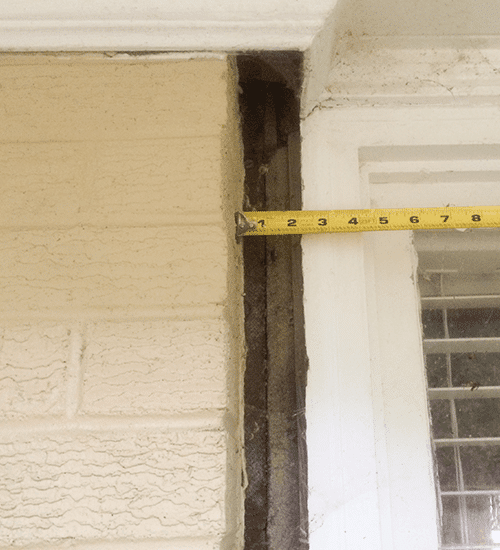
Diagonal cracks off a header usually mean the slab has moved unevenly beneath the framing. Pilings driven to firm bearing bring the low section back toward level. See slab foundation repair →
Pier and Beam Foundation Repair
Raised-foundation homes here sit over crawl spaces that stay damp most of the year. Give underfoot means a girder or pier pad has already lost the fight. See pier & beam repair →
Concrete Leveling
Driveways and walks settle on their own schedule. Lifting and re-supporting the existing panel beats demolition and a fresh pour. See concrete lifting →
Sewer Line Repair
Drainage Systems
Very slowly permeable prairie clay on flat ground does not shed water quickly. Water sitting against a slab edge for days is a structural problem. See drainage solutions →
Root Barrier Installation
Quail Valley’s canopy is over fifty years old now. Roots that mature draw moisture out of the same clay your perimeter beam is bearing on. See deep root barrier →
Common Foundation Problems in Missouri City, TX
Beneath the whole city sits the Beaumont Formation, a deep bed of Pleistocene clay laid down when this was coastal plain. The prairie soils that developed on it — Lake Charles clay and Bernard clay loam — are rated very slowly permeable and stay saturated within about two feet of the surface through winter and early spring. Lake Charles runs 45 to 60 percent clay and opens cracks up to two inches wide during a dry stretch, cracks that stay open for 60 to 90 cumulative days in a normal year. Toward the western edge the surface gives way to Brazos River floodplain deposits, which behave differently again.
There is a second mechanism working here that has nothing to do with weather. Decades of groundwater withdrawal compacted clay layers deep below Fort Bend County, and the Fort Bend Subsidence District now regulates that withdrawal countywide. Its stated purpose is worth reading carefully: preventing subsidence that contributes to flooding, inundation and overflow, including rising water from storms and hurricanes. Regional subsidence is not what cracks an individual slab. What it does is lower the whole neighborhood relative to where water wants to go, which makes local drainage matter more than it otherwise would.
Early Signs of Foundation Movement in Missouri City Homes
- Start with the door frames. A door that latches cleanly in February and drags by August is following soil moisture, not humidity in the wood.
- Then check the brick. Mortar joints separating in a staircase pattern mean sections of wall are moving at different rates along their length.
- Look above the windows inside. Diagonal sheetrock cracks running off a corner point to framing being racked out of square.
- Put a ball on the floor. If it tracks on its own, or the floor flexes underfoot over a crawl space, support has already been lost.
- Walk the perimeter after a dry spell. A visible gap where soil has pulled back from the beam is a channel straight down to the ground you least want soaked.
- Watch the yard after the storm passes, not during. On flat, very slowly permeable clay the telling detail is how long water stands, and whether it drains toward the street or sits against the house.
What Foundation Repair in Missouri City, TX Involves
Three things decide scope on any job here: how deep the moving layer goes, what is carrying the structure now, and where water goes once it leaves your roof. That last question has a Missouri City wrinkle most homeowners have never had to think about.
Getting Pilings Below the Active Layer
Depth is set by resistance, and on Beaumont clay the target sits below the band that cycles with the seasons. Our crews advance segmented pilings hydraulically until each meets firm bearing rather than driving to a preset number, and that depth varies across a single lot because these deposits are not uniform. Placement follows the load path — perimeter beams, interior grade beams, bearing points — instead of an even ring around the house. Lifting happens in stages afterward, with fresh elevation readings taken at every station so no section runs ahead of the ones beside it, and steel shims lock the achieved elevation in place. On the older homes here, where cast iron drain lines have been in the ground since the 1970s, a hydrostatic test after the lift is standard rather than optional.
Working Under a Raised Foundation
Most of Missouri City is slab-on-grade, but the pre-1960s stock and some rural-edge properties sit on raised wood framing, and that work runs differently. We map the floor contour first to find where support has actually gone, then address the usual combination: pier pads that have punched down into the clay, sagging girders, rot at the sill where ground moisture has been working for decades. Jacking happens in small increments over several passes rather than one long lift, so plaster and original trim have time to travel with the frame. A ground vapor barrier reduces the moisture load underneath, and how the perimeter vents matters just as much, because a crawl space that cannot dry out in Gulf Coast humidity will hand back the same rot in a few years.
Tracing Where the Water Actually Comes From
Here is the part that catches people out. Missouri City does not maintain all of its own drainage. By the City’s own account, it maintains storm drainage in some areas but not citywide, and most local systems are maintained instead by a Municipal Utility District or a Levee Improvement District. The City’s watershed master plan update exists partly to sort out who is responsible for what. So when water is pooling against your slab because of something upstream of your property line, step one is finding out which entity owns that infrastructure, and the City will tell you if you call. Everything on your side of the line is still yours: grade correction at the slab edge, French drains with real fall at the invert, catch basins sized to what they actually collect, and downspouts carried well clear of the foundation. See drainage solutions →

Why Choose Dura Pier for Foundation Repair in Pasadena
- 45+ Years Serving Texas
- BBB A+ Accredited
- Highly Trained Technicians
- Top Grade Materials
- Best In Class Warranties
- Financing Available
A Baseline You Keep
Every evaluation produces a benchmark and a full set of floor elevations, and those numbers are yours whether you hire us or not. That matters more than it sounds. If we conclude your house does not need work, you now have documented proof of exactly where it sat on this date, and re-shooting it next year tells you whether anything actually changed instead of leaving you to argue with a memory.
The Dura Lock XD® Piling System
A decade is the real test. Getting a house level on the day of the lift is not the hard part — holding that elevation through ten more years of clay swelling and shrinking underneath it is. Dura Lock XD® is our proprietary tensioned piling system, built to stay loaded so the column does not drift as the ground works against it season after season. Learn more about Dura Lock XD® →
Everything Priced by the Line
Each piling, each drain run and each barrier appears separately on your estimate, so nothing hides inside a single number. The warranty runs for the life of the structure, fits on one page with no exclusions, and transfers to the next owner without a fee. See financing options →
Foundation Repair FAQs in Missouri City, TX
How long does the work take?
Active work on a typical single-family pier job here runs a few days. Raised-foundation homes take longer because the lifting is staged in increments. Under-slab tunneling and combined drainage scopes extend it further. Add scheduling, any required permit and the post-lift plumbing test, and the calendar window is always wider than the working days. You get a date range in writing before we start.
Who is responsible for the drainage on my street?
Often not the City, which surprises people. Missouri City maintains storm drainage in some areas but not citywide, and most local systems are maintained by a Municipal Utility District or Levee Improvement District instead. If water is backing up onto your lot from infrastructure beyond your property line, find out which entity owns it before you spend money on your own yard. The City can tell you which district covers your address.
What does foundation repair cost?
Pier count, depth to firm bearing and whether drainage work is needed drive the number. Across this region, moderate residential repairs commonly land in the low-to-mid thousands, while whole-house corrections combined with drainage run considerably higher. Larger homes in the newer sections sit toward the upper end simply because there is more structure to support. Only an on-site evaluation with elevation readings produces a real figure, and ours is free.
Who is going to ask me for an engineer's report?
Lenders, insurers and buyers, most often. In Texas a licensed professional engineer is the party authorized to issue an engineering evaluation, and a contractor is not, so if any of those three want a stamped opinion you need a PE rather than a repair company. Outside of that it is a judgment call. We work from engineer plans routinely and will say when we think one belongs on your project.
Is subsidence causing my foundation problem?
Probably not directly. Regional subsidence from decades of groundwater withdrawal is real here, and the Fort Bend Subsidence District regulates pumping countywide specifically to limit it. But subsidence lowers whole areas fairly evenly, and foundations crack from differential movement — one part of the house moving relative to another. What subsidence does do is worsen how water drains across the area, and drainage absolutely does move slabs.
My house is in a newer section. Should I still be watching for this?
Yes. Newer construction has better slab design and better lot grading than 1970s stock, but it sits on exactly the same clay. Movement in the first years is often fill settling and finding equilibrium, which is normal. Movement that keeps progressing is not. Get a baseline set of elevations while any builder warranty is still active — it is the strongest documentation you can bring to that conversation.
Areas We Serve Near Missouri City
Missouri City anchors our eastern Fort Bend County coverage, and our crews work the surrounding communities on the same schedule.
- Sugar Land
- Stafford
- Pearland
- Richmond
- Rosenberg
- Fresno
- Arcola
- Houston
Request a Free Foundation Evaluation in Missouri City, TX
You get all of it on paper before anyone digs: elevation readings, a contour map showing the actual shape of the movement, an assessment of where water sits on your lot, a pier count with placement, and a price for each line rather than one lump number. If the readings do not support doing work, the report says exactly that and you keep the baseline. For foundation repair in Missouri City, TX, call (713) 721-8888 or request your evaluation online.