League City, TX Foundation Repair, Concrete Leveling & Drainage
Home » Service Areas » League City, TX
League City Foundation Repair Services
Concrete Slab Foundation Repair
Pier and Beam Foundation Repair
Concrete Leveling
Sewer Line Repair
Drainage Systems
Root Barrier Installation
A deep root barrier can help limit root-related moisture changes near a foundation. It is considered when mature landscaping and soil-moisture fluctuations are contributing to movement.
Comprehensive Foundation Repair Solutions for League City
A lasting repair begins with knowing how the structure is moving. Dura Pier combines elevation readings, foundation type, visible symptoms, drainage conditions, and load paths before recommending work. The goal is to stabilize the structure while addressing the conditions that contributed to movement.
Slab Elevation and Deep Piling Systems
For a settling slab, the first question is where the elevation changes occur. Dura Pier can establish reference elevations across the home and identify low areas that need support. When deep underpinning is appropriate, Dura Lock XD® pilings are driven into the soil with hydraulic equipment. Segments are connected and tensioned as installation progresses. The piling is advanced until refusal or the required bearing condition is reached rather than stopping at an arbitrary shallow depth.
If lifting is part of the scope, hydraulic jacks are sequenced across selected support points. The goal is controlled movement rather than a sudden correction. Readings are checked as the slab responds. Where the repair calls for it, steel shims or other permanent support components can be installed at the corrected load path. This approach fits League City’s broad mix of established slab homes and newer subdivision construction.
Crawl Spaces and Pier-and-Beam Homes
Older League City properties can have crawl spaces, elevated floors, or pier-and-beam construction. These systems require an inspection below the floor, where settlement may involve individual piers, beams, joists, moisture damage, or uneven bearing.
A proper repair starts by mapping the floor and inspecting the crawl space. Failed or undersized supports are identified before new supports are placed. Hydraulic lifting can then be sequenced to correct the elevation without overstressing the framing. Steel shims may be used where appropriate to achieve solid, permanent bearing. A vapor barrier can also be considered when crawl-space moisture is part of the problem. The repair plan should account for drainage, wood condition, and the actual load path from the floor to the soil.
Drainage and Moisture Control
Drainage deserves special attention in League City because local flooding studies have focused on the Lower Clear Creek and Dickinson Bayou watersheds, while the city has commissioned drainage studies in multiple subdivisions after Hurricane Harvey. Local clay soils also have slow infiltration characteristics.
Dura Pier evaluates roof discharge, downspouts, surface grading, low spots, collection points, and water movement around the foundation. The goal is to reduce repeated saturation along one side of the structure. Drainage improvements may include surface collection, subsurface drainage, or grading corrections, depending on the property. Managing water does not replace structural repair when a foundation has already settled. It helps create a better moisture environment after stabilization.

Common Foundation Problems in League City
The Beaumont Formation is a Pleistocene coastal deposit with layers of clay, fine sand, and silt. Local engineering reports describe clay minerals and wetting and drying features that can affect engineering behavior.
League City’s mapped soils also include Lake Charles clay and Bernard soils. Lake Charles clay can have slow permeability, while Bernard soils can behave differently. That variation is why a soil label alone should not determine a repair. Lot grading, drainage, foundation type, plumbing, trees, and actual elevation readings all matter.
Early Signs of Foundation Movement in League City Homes
- Sheetrock cracks: Diagonal or stair-step cracks around doors, windows, and wall openings can indicate movement.
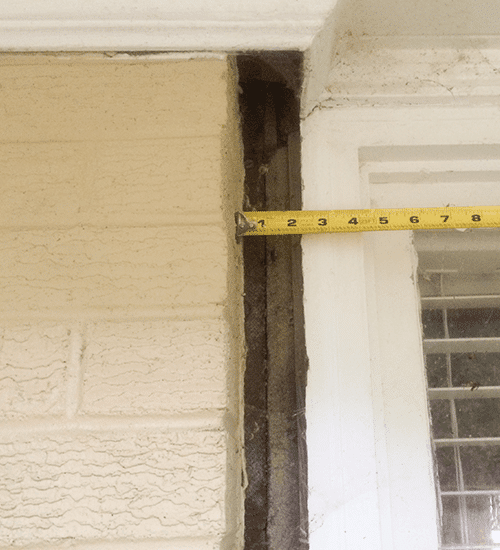
- Brick veneer stair-stepping: Stair-step cracking that progresses through mortar joints can signal differential movement.
- Door and window binding: Frames can move out of square when sections of the foundation change elevation.
- Floor deflection: Sloping, dipping, or bouncy floors can indicate uneven support.
- Soil separation at the beam: A visible gap where soil pulls away from a grade beam can indicate changing moisture or settlement.
- Post-storm water pooling: Repeated standing water beside the foundation after heavy rain is a local warning sign because League City’s flat terrain and slow-draining clay can keep perimeter soils wet.
Why League City Homeowners Choose Dura Pier
- 45+ Years Serving Texas
- BBB A+ Accredited
- Highly Trained Technicians
- Top Grade Materials
- Best In Class Warranties
- Financing Available
Elevation Readings and Floor Contour Mapping
A crack does not show the entire movement pattern. Dura Pier evaluates elevation changes across the structure and uses floor contour information to identify high and low areas. That information helps separate isolated cosmetic symptoms from broader settlement or heave. The resulting repair plan can focus support where the structure actually needs it.
The Dura Lock XD® Piling System
Dura Lock XD® is Dura Pier’s proprietary tensioned piling system. The piling sections are connected and tensioned as they are driven. This creates a continuous support system designed to transfer structural loads deeper into the ground.
Transparent Pricing and a Transferable Warranty
Dura Pier provides repair recommendations based on the measured conditions at the property. A homeowner should be able to see what work is proposed and why it is included. Dura Pier also offers a one-page lifetime transferable warranty with no exclusions and no transfer fees. Financing options are available, including 0% interest financing options for qualified customers.
Areas We Serve Near League City
- Webster
- Dickinson
- Clear Lake
- Pearland
- Houston
- Alvin
- Friendswood
- Seabrook
- Kemah
Foundation Repair FAQs in League City, TX
What causes foundation movement in League City?
Foundation movement can result from changing soil moisture, drainage problems, plumbing leaks, settlement, or differences in soil and construction. League City’s Beaumont Formation and local clay soils create variable subsurface conditions, while heavy rain and watershed flooding can change moisture around a home. A site evaluation is needed to identify the actual cause.
How much does foundation repair cost in League City?
How long does foundation repair take?
Do I need a structural engineer?
Does homeowners insurance cover foundation repair?
Why is drainage important for League City homes?
Can I stay in my home during foundation repair?