Arlington, TX Foundation Repair, Slab Leveling, Pier & Beam

Arlington sits on a seam. West of that line, homes rest on Woodbine sand, the loose iron-stained material that grows the Eastern Cross Timbers post oaks. East of it, the ground turns to Eagle Ford Shale and black waxy clay. Two soils, two failure patterns, sometimes on the same street. Dura Pier maps which one is under your slab before recommending a single pier.

Arlington Foundation Repair Services

Arlington’s housing stock was poured across seventy years and two soil types. We match the method to the era of the house and the ground beneath it.

Concrete Slab Foundation Repair

Concrete Slab Foundation Repair

Everything built after the GM plant opened sits on slab-on-grade. We drive pilings to firm bearing and bring the low areas back toward level.

Pier and Beam Foundation Repair

Pier and Beam Foundation Repair

Homes near the historic downtown core predate the slab era. Raised wood framing gives us access underneath, and it also gives moisture somewhere to sit.

Concrete Leveling

Flatwork settles independently of the house. We lift and re-support the panel instead of demolishing and repouring it.
Sewer Line Repair and Replacement Services

Sewer Line Repair

Executing hand-excavated under-slab tunneling and modern pipe replacement to fix subterranean plumbing leaks that trigger clay expansion and severe slab heave.
Drainage system installation

Drainage Systems

Lots near Rush Creek, Johnson Creek and Village Creek shed water toward channels that fill fast. Getting runoff away from the slab is structural work, not landscaping.
Root Barrier Installation Service

Root Barrier Installation

Interlochen and the older wooded blocks are full of large post oaks and elms. Their roots pull moisture from clay that is already cycling hard on its own.

Common Foundation Problems in Arlington, TX

Eagle Ford Shale runs roughly 500 feet thick beneath the eastern half of the city. Buried in it are beds of bentonite, which is volcanic ash that weathered into clay. The mineral that ash became is montmorillonite, and it is one of the most aggressive expanders in the ground anywhere. Those bentonite seams reach up to ten inches thick. Published Tarrant County geology puts the swell-and-shrink range of that mineral at as much as seven inches, and names foundations and roads as the things it breaks. Above the shale sits Houston Black clay, which opens cracks half an inch to four inches wide at a foot down every dry summer, then seals them shut when the rain comes back.

Head west and the problem inverts. Woodbine sand does not swell. Water moves straight through it, which sounds like good news until you follow where the water goes. It travels down and sideways until it reaches clay, then spreads along that contact and loads the soil under one part of the house while the rest stays dry. Ferris and Heiden clays show up on the eroded side slopes in between. This is why an Arlington slab often drops on one end and holds firm on the other, and why a repair plan built from a walk-around instead of a measurement gets the pier count wrong.

Early Signs of Foundation Movement in Arlington Homes

  • Start at the door frames. Doors that latch fine in February and drag by August are tracking a moisture cycle, not warping.
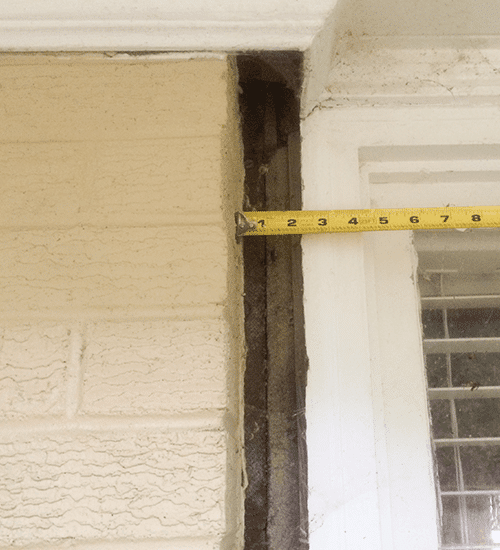
  • Then look at the brick. Cracks that climb the mortar joints in a staircase pattern mean the wall is moving at different rates along its length.
  • Check inside corners above windows. Diagonal sheetrock cracks running off a corner point to a racking frame.
  • Put a ball on the floor. If it rolls on its own, or the floor gives underfoot in an older raised-foundation home, support has already been lost.
  • Walk the perimeter after a dry spell. A visible gap where the dirt has pulled back from the beam tells you the clay shrank out from under the edge.
  • Compare the two ends of the house. Movement concentrated on one side while the other stays square is common in Arlington, because the soil under a single lot can change from sand to clay.

What Foundation Repair in Arlington, TX Actually Involves

Three questions decide the scope of any job here. What is the actual shape of the movement, what is holding the structure up now, and where is water going after it hits your lot. Below is how our crews answer each one, and how the answers change depending on which side of Arlington’s geologic seam your house happens to sit on.

How Do We Decide Where the Piers Go?

Guessing is the expensive option. We set a benchmark and shoot elevation readings across the entire floor plate, then draw a contour from those numbers. The contour shows whether the slab has dropped at a corner, dished in the middle or tilted along one axis. Each of those calls for a different pier layout and a different pier count. Published repair guidance for this region commonly describes a typical house needing somewhere in the range of eight to twelve piers, with severe cases needing far more, and the honest answer is that the readings decide, not the average. Load path matters too. Pilings go where the structure actually transfers weight down, which means perimeter beams, interior grade beams and load-bearing points, not evenly around the outside like a fence.

How Do We Lift Without Breaking What Is Already Attached?

Slowly, and in an order worked out in advance. Pilings are advanced hydraulically until each one meets firm bearing, and on an Arlington lot that depth can differ by several feet between the sandy end and the clay end of the same house. Once the columns are seated, we lift in stages and take fresh readings at every station as we go, so no section gets ahead of its neighbors. Steel shims lock the achieved elevation. Dura Lock XD® then holds each column in tension, which is what stops it drifting through the next seven-inch swell cycle. Plumbing gets attention afterward. A lift stresses the drain lines under the slab, so a hydrostatic test is standard practice on any meaningful correction. How Dura Lock works →

Why Is Drainage a Structural Problem in Arlington?

The city’s own record answers that. Tropical Storm Hermine flooded more than 250 Arlington structures in 2010, fifty of them along the Rush Creek corridor in Woodland Park. Arlington ultimately bought and demolished 49 of those 50 properties, a $17 million program paid for out of stormwater utility revenue under a 20-year bond. Some of the homes had flooded three times since 2004. Nothing that dramatic has to happen to hurt a foundation. Houston Black clay takes water fast when it is cracked open and almost refuses it when it is already wet, so a storm that arrives on saturated ground runs off instead of soaking in and pools at the lowest corner of the lot. Our fix is grade correction at the slab edge, French drains set with real fall, catch basins where the yard has no fall to give, and downspout runs carried well past the perimeter.


Pasadena foundation repair contractors

Why Arlington Homeowners Choose Dura Pier

  • 45+ Years Serving Texas
  • BBB A+ Accredited
  • Highly Trained Technicians
  • Top Grade Materials
  • Best In Class Warranties
  • Financing Available

Numbers Before Opinions

Our Arlington evaluation begins with a benchmark and a full set of floor elevations, not a tour of the cracks. You see the contour map we build from those readings. If the numbers do not support doing work, that is what we tell you, and you have a written baseline to re-measure against next year.

The Dura Lock XD® Piling System

Tension is the whole point. A piling that merely sits in place will be worked loose over time by ground that expands and contracts every season, which is exactly what Arlington’s bentonitic clay does. Dura Lock XD® keeps the column loaded so it stays where we put it.

Priced by the Line, Warrantied for Good

Estimates break out each piling, each drain run and each barrier separately, so nothing is buried in a lump sum. The warranty runs for the life of the structure, fits on a single page with no exclusions, and moves to the next owner at no charge.

Foundation Repair FAQs in Arlington, TX

How do I know this is real movement and not normal settling?
Measurement settles it. New construction does settle in its first year or two, and hairline shrinkage cracks in a slab are ordinary. Movement that keeps going shows a pattern: cracks that widen over months, doors that shift with the seasons, and elevation readings that vary across the floor by more than construction tolerance. One set of readings gives you a baseline. Two sets, months apart, give you an answer.
It depends on pier count, depth to firm bearing and whether drainage work is needed. Across North Texas, moderate residential repairs commonly land in the low-to-mid thousands, and whole-house corrections combined with drainage run well beyond that. Any firm quoting you a number over the phone is guessing. Our on-site evaluation with elevation readings is free and produces a real figure.
Active work on a typical Arlington single-family pier job usually runs a few days. Tunneling, larger homes and combined drainage scopes take longer. Add time for scheduling, any required permit and the post-lift plumbing test, which is why the calendar window is always wider than the working days. We put a date range in writing before we start.
Not on every job. In Texas, a licensed professional engineer is the one legally authorized to issue an engineering evaluation, and a contractor is not. That report is worth getting when movement is severe, when a lender or insurer requires it, or when you want an assessment with no financial stake in the outcome. We work from engineer plans regularly and will say plainly when we think one belongs on your project.
It changes the diagnosis. Homes over the Eagle Ford Shale on the east side deal with bentonitic clay that swells hard and holds water. Homes on the Woodbine sand to the west deal with water moving through porous ground until it hits clay below and loads one section of the house. Same symptoms upstairs, different mechanism underneath, different repair plan.
Yes, and that is not the disadvantage it sounds like. The Texas seller’s disclosure asks about known foundation repairs, so plan on reporting it. What buyers and their inspectors want to see is documentation and a warranty that carries over. Ours transfers to the new owner at no cost, which turns a disclosure line into evidence the problem was addressed properly.

Areas We Serve Near Arlington

Arlington anchors our coverage across Tarrant County, and our crews run the surrounding communities on the same schedule.

Request a Free Foundation Evaluation in Arlington, TX

Get a measurement before you get a quote. Our free evaluation includes a benchmark, elevation readings across your floor and a contour map that shows you the actual shape of the movement. If your house does not need work yet, we will say so and tell you what to watch for. When it does, you get line-item pricing, 0% financing options and a warranty that transfers with the property. For foundation repair in Arlington, TX, call (214) 699-4784 or request your estimate online.

Scroll to Top