Atascocita, TX Foundation Repair & Slab Leveling

Atascocita sits along Lake Houston in northeast Harris County, in an area where sandy surface soils sit over clay subsoil. That layering matters. Rain moves through the sand quickly and then stops when it reaches the clay, spreading sideways instead of soaking down, which means the soil under one part of your house can be saturated while the rest is dry. Foundation repair in Atascocita, TX has to account for that. Dura Pier uses floor elevation readings to find out what your house is actually doing.

Atascocita Foundation Repair Services

Atascocita grew fast, so most homes here are slab-on-grade built within a few decades of each other. That means a fairly predictable set of problems.

Concrete Slab Foundation Repair

Concrete Slab Foundation Repair

Nearly all Atascocita homes are slab-on-grade, many on fill brought in to level the lot. See slab foundation repair →

Pier and Beam Foundation Repair

Pier and Beam Foundation Repair

Older properties around the edges of the community sit on raised wood framing over crawl spaces. See pier & beam repair →

Concrete Leveling

Driveways, walks and patios settle separately from the house. See concrete lifting →

Pier and Beam Foundation Repair

House Raising

Properties near the Lake Houston and San Jacinto corridors have taken water more than once. See house raising →

Drainage system installation

Drainage Solutions

Sandy topsoil hands water to clay that will not take it. That water travels sideways to your slab edge. See drainage solutions →

Root Barrier Installation Service

Root Barrier Installation

Mature pines and oaks throughout the area draw moisture from the clay your perimeter bears on. See root barrier installation →

If Your Home Flooded, Read This

This is the issue that catches Atascocita homeowners out, and it is worth understanding.

Homes that took water during Harvey got restored. Drywall replaced, flooring redone, cabinets rebuilt. That work addressed the damage inside the house. What it did not address was what weeks of saturation followed by a hard dry-out did to the soil underneath.

Foundation movement from that cycle often surfaces months later, well after restoration is finished. Doors start sticking. A floor develops a slope you can feel. New cracks appear along stress lines in fresh drywall. Homeowners assume the restoration was done badly. Usually the restoration was fine and the ground moved.

If your home flooded and nobody has ever taken elevation readings, that is worth doing whether or not you are seeing symptoms yet. A documented baseline now tells you what changed later, and it costs nothing.


Early Signs of Foundation Movement in Atascocita Homes

  • Doors that bind by season. Sticking in a wet spring and easing in a dry August tracks soil moisture.
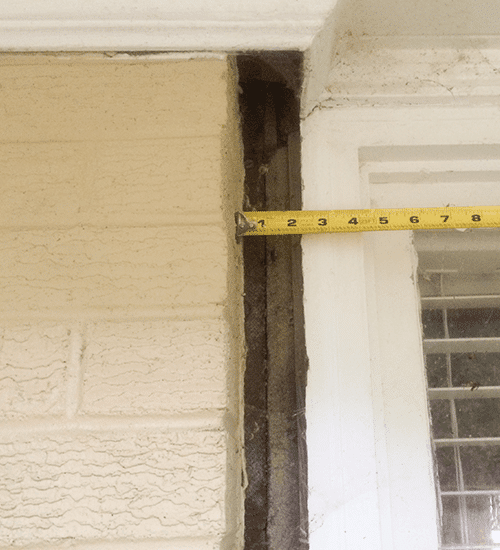
  • Stair-stepped cracks in the brick. Mortar joints cracking in a staircase pattern mean uneven movement.
  • Diagonal cracks off door and window corners. An angled crack from a corner means the frame is racking.
  • Floors that slope. A ball rolling on its own means support has been lost somewhere.
  • Movement concentrated on one side of the house. Common where sandy soil delivers water unevenly to the clay below.
  • New cracking months after a flood. Worth taking seriously rather than blaming the restoration work.

The Same Crews, Job After Job

  • 45+ Years Serving Texas
  • BBB A+ Accredited
  • Highly Trained Technicians
  • Top Grade Materials
  • Best In Class Warranties
  • Financing Available

Our technicians are trained in-house and many have been with us 15 to 30 years. Nothing is subcontracted out. That matters more than it sounds on a job where the difference between a repair that holds and one that does not comes down to how carefully the lift was staged and whether someone was watching the readings at every station.

What Happens After the Work Is Done

Most contractors are finished when the piers are in. We recommend a hydrostatic plumbing test after any real lift, because raising a slab puts stress on the drain lines underneath and finding a break immediately costs far less than finding it through a wet spot next spring.

You also keep your elevation data. Re-shoot it in a year and you will know whether anything has changed, which is the only way to tell a repair that held from one that did not.

45+ years in Texas, three generations, BBB A+ accredited, lifetime transferable warranty.

Areas We Serve Near Atascocita

Atascocita anchors our northeast Harris County coverage, and our crews work the surrounding communities on the same schedule.

Atascocita Foundation Repair FAQs

What does foundation repair cost in Atascocita?

Most Houston-area jobs land between $3,500 and $10,000, with typical projects around $5,000 to $6,000. Small repairs cost less; whole-house leveling and interior piers can exceed $15,000. Pier count is the biggest variable and comes from the elevation readings rather than the size of the house.

Pressed concrete cylinder piles and steel pressed piles are the systems most often quoted around Houston, both driven hydraulically to refusal. On layered soil like this, reaching genuinely competent material matters more than usual, because a pier that stops in the sandy upper layer has not solved anything. We install Dura Lock XD®, our own tensioned segmented system.

Foam is the right answer for some slab problems and the wrong one for others.

It lifts by expanding against the soil under the concrete, and it works well when a monolithic slab has dropped over a void, when washout has carried material away, or when loose ground needs densifying. It is also what we would use on your driveway or patio.

Layered soil like Atascocita’s complicates it. Sandy surface material over clay subsoil means water moves sideways and can carry fines with it, so voids do form here. But it also means foam injected into the upper layer may not be bearing on anything stable. When the problem is the clay below cycling, piers driven past it are the answer.

If your home flooded, a void check is worth doing. Saturation and drainage can move a surprising amount of material out from under a slab.

At least 30 days, and ideally through one wet-to-dry seasonal change. The house settles into its corrected position over several weeks, and minor movement during that window is normal. Patching too early usually means doing it twice, and you should expect to adjust some doors during that period.

Yes. Movement from prolonged soil saturation often does not show up until months after restoration is complete. An evaluation gives you documented elevation readings whether or not anything is wrong, which means you can re-measure later and know what changed.

We recommend a hydrostatic test after any real lift, since raising a slab puts stress on the drain lines beneath it. See sewer line repair →

Request a Free Foundation Evaluation in Atascocita, TX

You get it on paper before anyone digs: elevation readings, a contour map, where water sits on your lot, a pier count with placement, and a price for each line. If the numbers do not support work, the report says so and you keep the baseline. For foundation repair in Atascocita, TX, call (713) 721-8888 or request your evaluation online.

Scroll to Top