
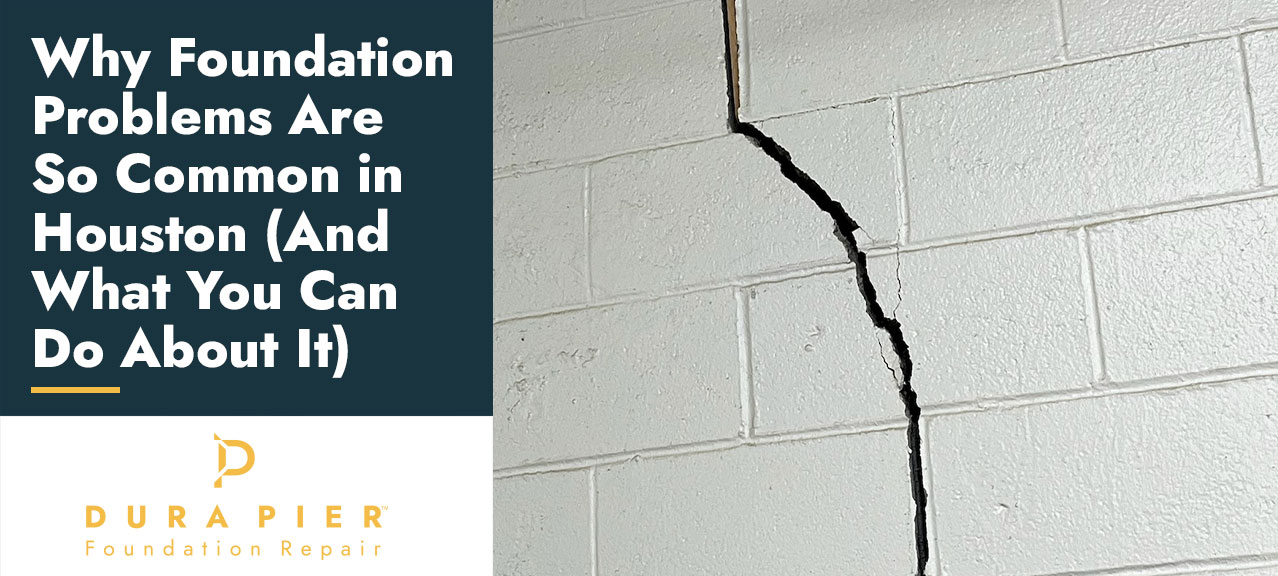
If you’re a homeowner in the Houston area, you’ve likely heard about foundation problems Houston residents deal with on a regular basis. Perhaps you’ve noticed cracks in your walls, doors that stick, or floors that seem slightly uneven. You’re not alone, and you’re not imagining things. The prevalence of foundation problems Houston experiences is directly tied to the region’s unique geological and climatic conditions. Understanding why foundation problems Houston homeowners face are so common can help you protect your most valuable investment and make informed decisions about maintenance and repairs.
Houston Clay Soil Foundation: The Root Cause of Structural Issues
The story of Houston’s foundation challenges begins beneath the surface, in the unique geological formation of the Gulf Coastal Plain. The region’s soil is predominantly composed of expansive clay, a material that behaves dramatically differently from the stable rock or sandy soils found in other parts of the country.
The Houston clay soil foundation challenge is unique because the soil contains montmorillonite minerals that absorb large amounts of water. These minerals act like microscopic sponges, capable of absorbing significant quantities of water and expanding in volume. When moisture is present, the clay particles separate and the soil swells. When conditions are dry, the particles compress together and the soil contracts.
This behavior creates what soil engineers call “differential movement”—the uneven rising and falling of soil beneath a foundation. Unlike uniform settling, which all foundations experience to some degree, differential movement places uneven stress on different parts of the foundation simultaneously. One corner of your home might be experiencing upward pressure from swelling soil while another corner is dropping due to soil shrinkage.
Every Houston clay soil foundation faces the same cyclical stress from soil expansion and contraction. During wet periods, the clay soil expands and applies upward pressure on the foundation, which can cause cracking and structural stress. This upward force, known as “heaving,” can be powerful enough to lift portions of a foundation, creating cracks in walls, floors, and the foundation itself.
Conversely, during dry periods, the soil shrinks and creates voids beneath the foundation, causing it to settle unevenly. This settlement can result in sloping floors, misaligned doors and windows, and gaps in trim or baseboards. The constant fluctuation between these two states weakens the foundation over time, making it increasingly vulnerable to structural damage.
Weather Patterns That Amplify Foundation Issues Houston Properties Face
Houston’s climate creates the perfect conditions for foundation damage. The region experiences dramatic fluctuations between heavy rainfall and prolonged drought, and these extremes directly trigger the soil expansion and contraction that damages foundations. With an average annual rainfall of about 50 inches combined with hot, dry summers, Houston’s weather patterns create repeated cycles of soil expansion and contraction throughout the year.
The Drought Cycle
During drought conditions, the soil around your foundation dries out and begins to shrink. When the ground around your home dries out, it begins to shrink, and if the soil shrinks enough, it can shift or settle under the foundation. This shrinkage is particularly problematic for homes built on clay-heavy soil, which is the norm in Houston.
The effects of drought manifest in several ways. As soil contracts and pulls away from the foundation, gaps form beneath the structure. The weight of your home then causes the foundation to settle into these voids, often unevenly. You may notice doors and windows starting to move off-center, cracks appearing in drywall, and cracks forming in the foundation or exterior walls.
Prolonged dry spells can cause clay soil beneath homes to shrink at an accelerated rate, with droughts causing foundation damage to occur at a faster rate and to a greater degree.
The Heavy Rain Cycle
The danger doesn’t end when the rains return. Heavy rainfall following a drought can actually make foundation problems worse. When previously dried and cracked soil becomes oversaturated, it creates hydrostatic pressure against the foundation.
Water accumulates in the soil and fully saturates the ground, and the force of this pressure can cause foundation damage, as well as water intrusion. This water intrusion can lead to additional complications such as mold growth and further structural instability.
The rapid expansion of clay soil as it absorbs water can lead to further cracking and shifting of the foundation. If the soil has developed cracks during dry periods, rain can seep into these fissures and cause the soil to swell, putting additional pressure on the foundation from below.
The foundation issues Houston properties experience are not random occurrences but predictable results of these environmental factors. This cyclical pattern of wet and dry conditions places continuous stress on foundations year after year, compounding the cumulative damage over time.
Foundation Repair Houston: What Homeowners Need to Know About Costs
Understanding the financial reality of foundation repairs is crucial for Houston homeowners. When it comes to foundation repair Houston homeowners have several options, but costs can vary significantly based on the severity of damage.
Breaking Down Foundation Repair Cost Houston Homeowners Can Expect
Professional foundation repair Houston services typically range from $3,500 to $10,000 for standard repairs, with most jobs landing around $4,500 to $5,000. However, these costs can escalate dramatically depending on the extent of the damage.
Here’s what you need to know about cost ranges:
- Minor crack repairs: $250 to $800 for sealing small cracks and cosmetic fixes
- Standard repairs: $3,500 to $10,000 for exterior piers and partial interior leveling (most common)
- Foundation leak repairs: $2,000 to $12,000 for waterproofing and seepage prevention
- Major structural repairs: $15,000 to $40,000 for deep piers, whole house leveling, and extensive underpinning
- Full foundation replacement: Up to $100,000 for complete foundation reconstruction in extreme cases
The foundation repair cost Houston homeowners face depends heavily on the number of piers required and the foundation type. The number of piers needed is the single biggest driver of repair costs. A typical 2,000 square foot home in Houston may require 20 to 30 piers, which significantly impacts the final cost.
Individual pier costs vary by type. Concrete piers typically cost $300 to $1,200 each, while steel piers range from $800 to $1,200 each. Most homes require between 8 and 20 piers.
The type of foundation also plays a crucial role. Slab foundations generally incur higher repair costs due to the complexity of lifting the concrete slab and installing piers underneath. Pier-and-beam foundations tend to be less expensive to repair due to easier access to the foundation structure.
The Value of Early Intervention
One of the most critical findings about repair costs is the importance of addressing foundation issues promptly. A $500 crack repair performed early can prevent a much larger $15,000 underpinning project later on. This dramatic cost difference underscores the financial wisdom of regular foundation inspections and immediate attention to warning signs.
Addressing foundation issues Houston homes develop early can save thousands in future repair costs. The earlier you make repairs, the less expensive those repairs will be.
Critical Signs of Foundation Problems Every Homeowner Should Recognize
Recognizing the signs of foundation problems early is crucial for minimizing repair costs and preventing structural damage. Not all foundation movement indicates a serious problem—some cracking in concrete is expected as part of normal settling. However, significant signs of distress should not be ignored.
How to Identify Foundation Problems in Houston Before They Worsen
Learning how to identify foundation problems in Houston can save homeowners thousands of dollars in preventable damage. The most critical signs of foundation problems include:
Structural warning signs you shouldn’t ignore:
- Jagged wall cracks: Cracks running at a 45-degree angle indicate serious foundation shifts and require immediate attention
- Sticking doors and windows: When doors and windows begin to stick, it suggests the foundation has shifted, causing frames to become misaligned
- Cracks above windows: These cracks, particularly in brick homes where stair-stepping patterns may occur, are often signs of foundation compromise
- Horizontal foundation cracks: These indicate hydrostatic pressure and can lead to severe structural damage
- Uneven or sloping floors: This differential settlement results from uneven soil movement beneath the foundation
- Gaps in trim or baseboards: These separations indicate foundation movement and structural shifting
Knowing how to identify foundation problems in Houston means watching for specific warning signs like cracks above windows and gaps in trim. Approximately 25% of American homes are affected by soil expansion, with Houston representing one of the most severely impacted regions due to its expansive clay soil composition.
Foundation-Specific Issues
Different foundation types experience distinct problems. For slab foundations, watch for slab perimeter settling, which occurs when the edges of the slab settle due to improper compaction or moisture changes, leading to uneven floors and gaps in window frames. Foundation upheaval is another concern, where excess moisture can cause parts of the slab to lift, leading to cracks and uneven flooring.
For pier-and-beam foundations, excess moisture can cause wood rot in pier and beam homes, leading to structural damage. Soil contraction and expansion can also cause piers to shift, resulting in unstable flooring.
Common Foundation Problems and How to Address Them Early
The common foundation problems in Houston stem primarily from expansive clay soil and extreme weather fluctuations. Understanding these issues helps homeowners take proactive steps to protect their properties.
Underlying Environmental Factors
Several environmental factors contribute to foundation instability:
- Shifting soils: The expansive clay soils in Texas are prone to significant moisture changes, leading to instability
- Maturing trees: Tree roots can remove moisture from the soil, causing it to contract and destabilize the foundation. Root barriers may be necessary to prevent damage
- Water damage: Flooding and poor drainage can lead to soil expansion and foundation cracks
- Poor ventilation: Inadequate ventilation in crawl spaces can lead to moisture buildup and wood rot
Identifying common foundation problems early allows for less expensive interventions before major structural damage occurs. At DuraPier, we understand the unique challenges Houston homeowners face and provide expert solutions tailored to local conditions.
Prevention Strategies That Work
Maintaining consistent moisture levels around your foundation is critical. During dry periods, homeowners should use soaker hoses placed six to 18 inches away from the foundation to prevent excessive soil shrinkage. This practice helps maintain soil stability and reduces the stress on foundations during drought conditions.
Proper drainage systems are essential for Houston homes. French drains help redirect water away from the foundation, while surface drains prevent water from pooling around the foundation perimeter. Keeping gutters clean and ensuring water is directed away from the foundation is also crucial.
Paying attention to your foundation year-round will help minimize the potential movement and cracks in your foundation. Professional evaluations can help detect early signs of damage and recommend effective solutions before minor issues escalate into major problems.
Professional Repair Solutions
When prevention isn’t enough, several repair methods are available. Steel pier techniques provide reliable support, especially in clay soil conditions. Concrete piering strategies involve using helix piers for durable support. Helical piering applications stabilize foundations by securely installing a pier system.
Waterproofing is recommended as a preventive measure to block seepage and protect the foundation from water damage. Newer techniques such as ionic soil stabilization can provide long-term solutions by altering the soil’s properties to prevent swelling and shrinking.
Frequently Asked Questions About Foundation Problems in Houston
Are foundation problems common in Houston?
Yes, foundation problems are extremely common in Houston. Approximately 25% of American homes are affected by soil expansion, and Houston represents one of the most severely impacted regions due to its expansive clay soil composition and extreme weather fluctuations. The combination of montmorillonite-rich clay soil and Houston’s climate of heavy rainfall followed by hot, dry periods creates ideal conditions for foundation damage.
How much does foundation repair cost in Houston?
Foundation repair costs in Houston typically range from $3,500 to $10,000 for standard repairs, with most jobs averaging around $4,500 to $5,000. However, costs can vary significantly based on the severity of damage. Minor crack repairs may cost $250 to $800, while major structural repairs can exceed $15,000. In extreme cases requiring full foundation replacement, costs can reach up to $100,000. The number of piers required is the single biggest driver of repair costs.
What causes foundation problems in Houston?
Foundation problems in Houston are primarily caused by the region’s expansive clay soil, which contains montmorillonite minerals that absorb large amounts of water. This soil swells when wet and shrinks when dry, creating continuous stress on foundations. Houston’s weather patterns—with an average annual rainfall of about 50 inches combined with hot, dry summers—create repeated cycles of soil expansion and contraction that damage foundations over time.
Can I prevent foundation problems in my Houston home?
While you can’t completely eliminate the risk of foundation problems in Houston, you can significantly reduce it through proper maintenance. Maintain consistent moisture levels around your foundation using soaker hoses during dry periods. Install proper drainage systems like French drains and surface drains. Keep gutters clean and direct water away from your foundation. Schedule regular professional inspections to catch problems early when they’re less expensive to fix.
Protecting Your Houston Home’s Foundation
Understanding why foundation problems Houston homeowners face are so common is the first step toward protecting your property. The unique combination of expansive clay soil and extreme weather patterns creates challenges that require awareness, proactive maintenance, and timely intervention.
The key takeaways for Houston homeowners are clear. Your foundation sits on soil that naturally expands and contracts with moisture changes. The region’s weather patterns of heavy rainfall and drought amplify this cycle. Early detection and repair of foundation issues can save you thousands of dollars compared to waiting until problems become severe.
Regular inspections, proper drainage, and consistent moisture management aren’t just recommendations—they’re essential practices for protecting your home’s structural integrity and value. When you notice warning signs like cracks, sticking doors, or uneven floors, don’t wait. The earlier you address foundation problems, the less expensive and less disruptive the repairs will be.
If you’re concerned about your foundation or have noticed any warning signs, it’s time to take action. Contact our team of foundation experts who understand Houston’s unique challenges. We provide thorough inspections, honest assessments, and effective solutions tailored to your home’s specific needs. Don’t let foundation problems Houston homeowners commonly face become your financial burden—get in touch today for a professional evaluation and peace of mind.