
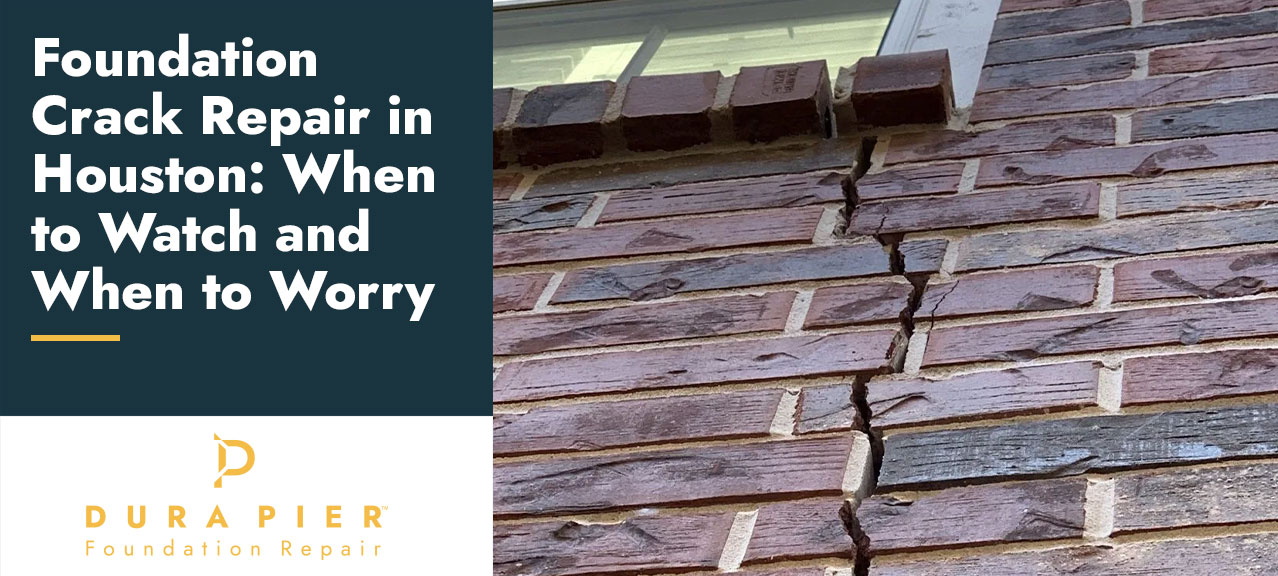
At Dura Pier of Houston, we know Houston homes face a unique set of foundation challenges. Expansive clay soils, shifting moisture levels, heavy rain, and periods of drought can all contribute to cracking in slab and pier-and-beam foundations. Some cracks are cosmetic and relatively common, but others point to movement that needs professional attention. Understanding the difference can help you protect your home before a small issue becomes a costly repair. Houston’s clay soils and moisture swings are a major cause of foundation movement, and cracks often appear when the soil expands, shrinks, or drains poorly around the home.
Why Foundation Cracks Happen in Houston
In Houston, foundation cracks are often less about the concrete itself and more about the soil beneath it. Clay soil expands when it absorbs water and shrinks when it dries out, which creates pressure changes under the foundation. Over time, that movement can lead to settlement, heaving, or voids beneath the slab. Poor drainage, plumbing leaks, and uneven watering around the home can make the problem worse. Houston foundation issues are commonly tied to expansive clay soil, moisture extremes, and drainage problems around the property.
This means a crack in your foundation is not always random. It may be a visible sign that the ground beneath your home is moving unevenly. In many cases, the earlier you catch the cause, the easier it is to limit further damage. Soil shrinkage, oversaturation, and drainage problems are repeatedly identified as key drivers to a home needing foundation crack repair in Houston.
Cracks You Can Often Watch
Not every crack means you need immediate repair. Hairline cracks that are small, stable, and not changing much over time can sometimes be part of normal settling. That is especially true if you do not see other warning signs such as sticking doors, sloping floors, or new cracks elsewhere in the home. Minor cracks can be monitored, but they should still be documented so you can compare them later. Small cracks may begin as normal settling, but they can become more serious if moisture or soil movement continues.
A good rule of thumb is to watch cracks that are thin, dry, and not spreading quickly. If the crack is not widening, if it does not run in a troubling pattern, and if the rest of the home appears stable, monitoring may be reasonable for the time being. Still, even minor cracks deserve attention if they appear after a major weather change, a long dry spell, or a plumbing leak. Houston homes often show early warning signs before a larger foundation issue becomes obvious.
Cracks That Need Attention
Some cracks should not be treated as cosmetic. Diagonal cracks, stair-step cracks in brick, and cracks that are widening over time may signal differential movement in the foundation. Cracks that appear with interior drywall separation, ceiling gaps, floor slopes, or doors and windows that no longer close properly are especially concerning. In Houston homes, these signs often point to soil movement rather than simple surface wear.
You should also worry if cracks are accompanied by moisture intrusion. Water entering through foundation cracks can make the problem worse by eroding soil, increasing pressure, or creating more movement under the slab. Cracks that are active, growing, or paired with visible structural changes should be inspected promptly. Foundation warning signs in Houston commonly include cracks plus sticking doors, uneven floors, and other signs of movement.
Signs Of Bigger Problems
Foundation cracks rarely happen in isolation. If you notice several symptoms at the same time, the issue is more likely structural than superficial. Look for these warning signs:
- Doors or windows that stick, bind, or stop latching properly.
- Uneven or sloping floors.
- Interior drywall cracks, especially around door frames or corners.
- Exterior brick or stucco cracks, especially diagonal or stair-step patterns.
- Gaps between walls, ceilings, baseboards, or trim.
- Cracks that grow longer, wider, or more numerous over time.
These signs often show that the foundation is moving unevenly, not just settling normally. Houston homes commonly show this pattern when soil moisture shifts create pressure and support changes under the foundation.
What To Do Next
If a crack is minor and appears stable, monitor it closely and keep a record of its size, location, and appearance. Taking a dated photo with a ruler or coin for scale can help you track changes over time. Check the area after heavy rain, prolonged heat, or plumbing issues, since those conditions can influence soil movement. When in doubt, it is better to inspect early than wait for the problem to spread.
If the crack is widening, recurring, or accompanied by other signs of movement, schedule a professional foundation inspection. A qualified assessment can help determine whether the crack is cosmetic, moisture-related, or a sign of deeper structural movement. In Houston, that distinction matters because local soil conditions can turn a small issue into a larger one quickly. Houston foundation repair guidance consistently emphasizes early evaluation when cracks are paired with movement or moisture concerns.
Preventing Future Cracks
The best long-term strategy is to reduce the soil movement around your home. Good drainage, properly extended downspouts, and grading that directs water away from the foundation can all help. Consistent moisture management is also important in Houston’s climate because extreme wet-and-dry swings can stress the soil beneath your home. Many foundation problems in Houston start with water management issues around the property.
Regular maintenance matters too. Walk the perimeter of your home after storms, check for pooling water, and keep an eye on cracks inside and outside the house. If you catch foundation movement early, you may be able to address the cause before the damage becomes more expensive. Houston foundation repair resources repeatedly point to water control and early response as the most effective ways to limit worsening cracks.
What If I Find Cracks?
If you notice cracks in your foundation, do not assume they are harmless. Some cracks are only cosmetic, but others can be a warning sign that your home is shifting and needs attention.
The safest next step is to call Dura Pier or fill out the form on the site for an inspection. That way, you can find out whether the crack is something minor to monitor or a problem that should be repaired before it gets worse.