
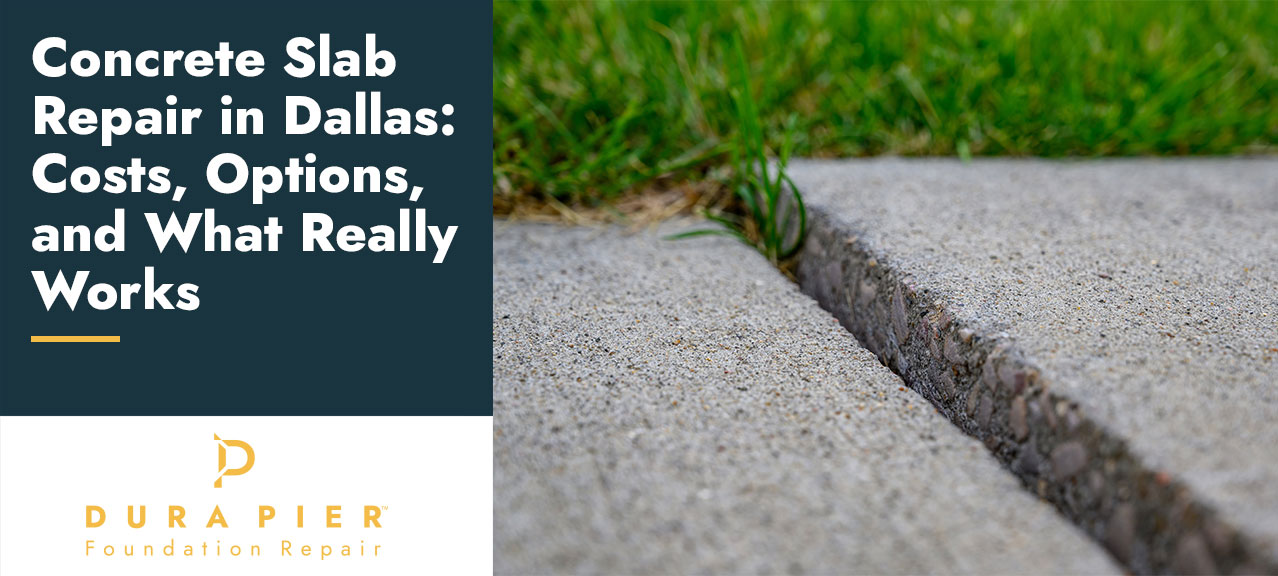
If you’ve noticed cracks creeping across your walls or doors that suddenly won’t close right, you’re not imagining it. Dallas slab foundation repair is one of the most common home repairs in North Texas, and there’s a reason for it. Our region sits on expansive clay soil that swells when it rains and shrinks during our long, dry summers, putting constant stress on concrete slabs.
The good news is that most slab issues are fixable, and many homeowners catch them early enough to avoid major structural damage. This guide, brought to you by the team at Dura Pier of Dallas, breaks down what causes slab problems in Dallas, what repair actually costs, which methods work best, and how to choose a contractor you can trust.
Why Dallas Homes Are So Prone to Slab Foundation Problems
Dallas-Fort Worth sits on a bed of highly expansive clay soil, often referred to locally as “black gumbo.” This soil type can expand by as much as 10% in volume when saturated and contract significantly during drought conditions.
That constant expansion and contraction cycle puts uneven pressure on a home’s foundation. Over time, this leads to:
- Uneven settling in different sections of the slab
- Cracks in drywall, brick veneer, and the slab itself
- Doors and windows that stick or won’t latch
- Sloping or bouncy floors
- Gaps between walls and ceilings or baseboards
Add in Dallas’s swings between torrential spring rains and 100-degree summer droughts, and you get one of the most foundation-repair-heavy markets in the country. According to the American Society of Civil Engineers, expansive soils cause more damage to buildings annually in the U.S. than floods, hurricanes, tornadoes, and earthquakes combined.
Common Signs You Need Slab Foundation Repair
Catching foundation issues early almost always saves money. Here are the warning signs Dallas homeowners should watch for:
Interior Warning Signs
- Cracks in drywall, especially near door frames and corners
- Doors or windows that stick, drag, or won’t stay latched
- Uneven or sloping floors (a marble will roll on its own)
- Gaps forming between the wall and the ceiling or floor
Exterior Warning Signs
- Horizontal or stair-step cracks in brick or block
- Cracks in the concrete slab itself, especially wider than 1/4 inch
- A visible tilt or dip along the foundation line
- Separation between the chimney and the house
If you’re seeing more than one of these signs, it’s worth getting a professional inspection before the damage progresses further.
How Much Does Slab Foundation Repair Cost in Dallas?
This is usually the first question homeowners ask, and the honest answer is: it depends on the extent of the damage and the repair method used. That said, here are typical ranges seen across the Dallas market.
| Repair Method | Typical Cost Range | Best For |
|---|---|---|
| Minor crack sealing | $300 – $1,000 | Small, non-structural cracks |
| Concrete piers | $500 – $1,200 per pier | Moderate to severe settling |
| Steel push piers | $1,500 – $2,500 per pier | Heavier structures, deep soil issues |
| Helical piers | $1,500 – $3,000 per pier | Additions, lighter structures |
| Slab jacking / mudjacking | $500 – $1,300 per section | Sunken slabs without major cracking |
| Full foundation repair | $5,000 – $25,000+ | Significant, widespread damage |
Most Dallas homes with moderate settling issues end up needing anywhere from 6 to 12 piers, which is why total project costs commonly land between $6,000 and $15,000. Homes with more extensive damage, or those needing drainage correction as well, can run higher.
A few factors that influence your final price:
- Number of piers needed, based on the size and severity of settling
- Soil conditions on your specific lot
- Access to the foundation (tight side yards or landscaping can add labor time)
- Whether interior repairs like drywall or flooring are included
Getting a written, itemized estimate is the best way to avoid surprises. A trustworthy foundation repair company will always inspect your home in person before quoting a price.
Slab Foundation Repair Methods: What Really Works
Not every repair method is right for every situation. Here’s a breakdown of the main options used in Dallas foundation repair today.
Steel Push Piers
Steel push piers are driven deep into the soil until they reach load-bearing strata, then used to lift and stabilize the slab. This method is highly effective for heavier homes and severe settling, and it’s often backed by lifetime warranties from manufacturers.
Helical Piers
Helical piers work similarly to push piers but are screwed into the ground rather than driven. They’re a strong choice for lighter structures, additions, or porches, and they can be installed with less vibration and disruption.
Concrete Pressed Piers
Concrete piers are a more budget-friendly option that uses segments of concrete pressed into the ground under the weight of the structure. They can work well in certain soil conditions but generally don’t reach the same depth or load capacity as steel piers.
Mudjacking and Polyurethane Foam Injection
For slabs that have sunk but aren’t experiencing serious structural cracking, mudjacking (or the newer polyurethane foam injection method) can raise the slab by injecting material underneath it. This tends to be a faster and less invasive fix, though it isn’t a permanent solution for homes with ongoing settlement issues caused by soil movement. Read more about concrete lifting in Dallas.
Drainage Correction
Here’s something a lot of homeowners overlook: sometimes the real fix isn’t piers at all, it’s water management. Poor drainage, clogged gutters, or grading that pushes water toward the foundation can cause the same symptoms as a structural problem. Correcting drainage around your home is often a necessary companion to any repair method, and in some cases it prevents future settling altogether.
If you’re in the Dallas area and want a professional assessment of which method fits your home, our team at Dura Pier offers inspections specific to the soil and climate conditions found here through our Dallas foundation repair services.
How Long Does Foundation Repair Take?
Most residential slab repairs in Dallas take between 1 and 3 days, depending on the number of piers needed and the extent of the work. Larger or more complicated jobs, especially those involving drainage correction or interior repairs, may stretch to a week.
Here’s a general timeline:
- Inspection and estimate (same day to a few days)
- Scheduling and permitting, if required (varies by city)
- Pier installation and lifting (1 to 3 days for most homes)
- Follow-up monitoring, often included with warranty plans
Most reputable companies will also recommend a follow-up inspection 6 to 12 months later to confirm the repair is holding.
Choosing the Right Foundation Repair Company in Dallas
Not all foundation repair companies are created equal, and this is an industry where doing your homework really pays off. Look for:
- Local experience with Dallas-area clay soils specifically
- Engineering-backed assessments, not just a sales pitch
- Transparent, written estimates with a clear scope of work
- Warranties on both materials and labor
- Reviews and references from other homeowners in your area
Be cautious of any company that pressures you into same-day signing or can’t clearly explain why they’re recommending a specific repair method over another.
FAQ: Dallas Slab Foundation Repair
How much does it cost to fix a foundation in Dallas, TX? Most homeowners spend between $3,500 and $15,000, though costs can be lower for minor repairs or higher for extensive structural work. The final price depends on the number of piers needed and the severity of the settling.
Is foundation repair worth it before selling a house? Yes, in most cases. Unresolved foundation issues are a major red flag for buyers and can significantly reduce your home’s sale price or scare off buyers entirely. Getting repairs done, along with a warranty transfer, often adds more value than it costs.
How do I know if my foundation problem is serious? Cracks wider than 1/4 inch, doors that won’t latch, or visible sloping in your floors are signs that warrant a professional inspection. Smaller hairline cracks are often cosmetic, but it’s still worth having them checked.
Does homeowners insurance cover slab foundation repair? Typically not, unless the damage is caused by a covered event like a plumbing leak. Foundation settling caused by soil movement is generally considered a maintenance issue, not a covered peril.
How often should I have my foundation inspected in Dallas? Given our soil and climate, an inspection every 2 to 3 years is a reasonable precaution, especially for homes over 15 years old or those that have had prior repairs.
Final Thoughts
Dallas’s clay-heavy soil and dramatic weather swings make slab foundation issues a fact of life for a lot of homeowners in the area. The key is catching the warning signs early, whether that’s a sticking door or a hairline crack, and getting a proper inspection before small problems become expensive ones.
When it comes to Dallas slab foundation repair, the right method depends on your home’s specific soil conditions, the severity of the damage, and your long-term plans for the property. Steel piers, helical piers, and drainage correction each solve different problems, and a qualified inspector should be able to walk you through which combination makes sense for your house.
If you’re noticing signs of foundation movement, don’t wait for it to get worse. Contact our team at Dura Pier for a full inspection and a clear, honest estimate for your home.