
The mature trees in Dallas neighborhoods are part of what makes them worth living in. The shade in July, the curb appeal, the sense of permanence that comes with a 40-year-old live oak in the front yard. Nobody plants a tree thinking about what it might do to their foundation 20 years later.
But in Dallas, that’s a conversation worth having. The same soil conditions that make foundation movement so common across North Texas also make tree roots an unusually significant threat to structural stability. The two problems are connected, and understanding how they interact can save homeowners from some of the common issues that lead to foundation repair in Dallas.
Why Dallas Soil Makes Tree Roots More Dangerous
The issue isn’t trees themselves. It’s the combination of trees and the expansive clay soil that underlies most of the Dallas-Fort Worth area. This clay, sometimes called “black gumbo,” shrinks dramatically during dry periods and swells when it absorbs water. That seasonal movement is already hard on foundations without any help from nearby trees.
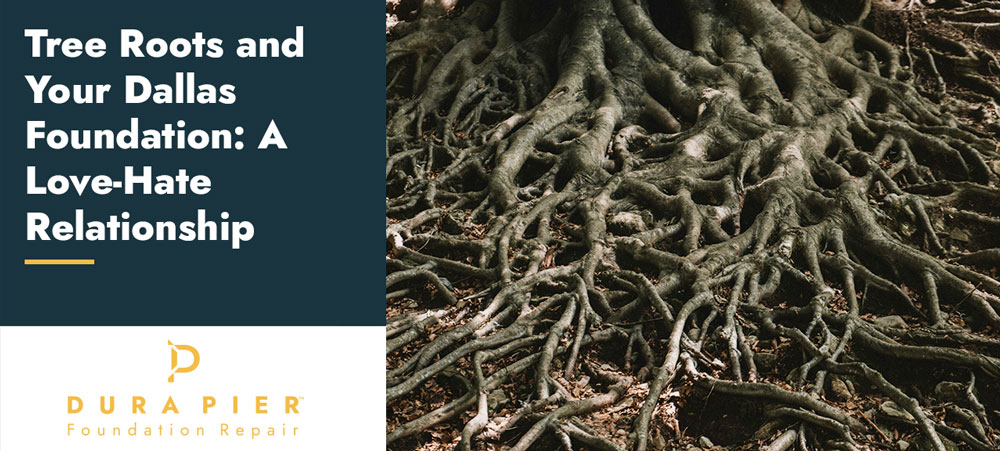
Tree roots amplify the problem in two distinct ways. First, large root systems extract significant amounts of moisture from the soil, causing the clay to shrink faster and more unevenly than it would on its own. Second, roots can physically grow beneath or alongside a foundation, exerting upward or lateral pressure as they expand.
The result is differential movement, where one section of your foundation shifts while the rest stays relatively stable. That kind of uneven movement is harder on a structure than gradual settling, and it tends to produce the most visible damage inside your home.
Which Trees Are Most Problematic for Dallas Foundations
Not all trees carry the same level of risk. The species that Dallas homeowners should pay the closest attention to are those with aggressive, moisture-seeking root systems.
Trees that most commonly contribute to foundation problems in the Dallas area include:
- Cottonwoods and willows — These are the most aggressive moisture seekers, with roots that can travel 30 to 50 feet in search of water. They should never be planted near a home’s foundation.
- Silver maples and box elders — Fast-growing and popular for shade, but their root systems are wide-spreading and actively seek out moisture differentials in the soil.
- Post oaks — Native to North Texas and well-established in older neighborhoods, these trees can create significant soil moisture depletion during drought years.
- Bradford pears — Common in Dallas subdivisions built in the 1990s and 2000s. Their root systems are shallower but wide, and they’re frequently planted closer to homes than they should be.
- Sycamores and pecans — Large canopy trees with root systems to match. Beautiful, but worth monitoring if they’re within 20 to 30 feet of the foundation.
The distance between the tree and your foundation matters, but it’s not the only factor. A large tree 30 feet away can affect soil moisture well beneath a slab. A smaller tree 10 feet away can cause physical root intrusion. Both scenarios are worth evaluating.
What Root-Related Foundation Damage Looks Like
The warning signs of tree root damage don’t look dramatically different from other types of foundation movement. They just tend to show up in patterns that point toward a specific corner or side of the home, often the side closest to a large tree.
Watch for diagonal cracks running from the corners of doors or windows, particularly in rooms that face your largest trees. Floors that slope toward one side of the home, doors that have started sticking seasonally but are getting progressively worse, and gaps forming between walls and the ceiling line are all signs worth taking seriously.
One sign that’s specific to root intrusion rather than pure soil moisture loss is cracking or upheaval along a concrete walkway or driveway near the tree. If roots are big enough to lift concrete flatwork, they’re capable of exerting pressure against a foundation as well.
Root Barriers: What They Do and When They’re Needed
A root barrier is a physical barrier, typically made of high-density polyethylene panels, installed vertically in the soil between a tree and your foundation. The barrier redirects root growth downward and away from the structure without harming the tree.
Root barriers are most effective when installed proactively, before root systems have already extended beneath the foundation. They can also be used remedially in situations where roots are approaching but haven’t yet caused measurable damage.
They’re not a substitute for foundation repair in cases where movement has already occurred, but they’re an important part of a long-term prevention strategy. Dura Pier’s root barrier installation in Dallas is specifically designed for the soil depths and root behavior common to the Dallas area.
Preventive Steps Dallas Homeowners Can Take
Managing the relationship between your trees and your foundation isn’t about removing every tree near your home. It’s about understanding the risk and taking steps to reduce it.
Keep a consistent moisture level in the soil around your foundation, especially during extended dry periods. When the soil shrinks dramatically due to drought, roots respond by reaching further in search of water, including beneath your slab. A soaker hose run along the perimeter during dry spells reduces that incentive. Also, pay attention to newly planted trees. The time to think about root barriers is before the tree’s root system has had years to establish itself beneath your home.
If you have large, established trees within 15 to 20 feet of your foundation, schedule a professional evaluation to understand what, if anything, is already happening. A qualified inspector can assess both the structural condition of the foundation and whether the surrounding soil moisture pattern suggests active root influence.
Dallas homeowners shouldn’t have to choose between their trees and their foundation. With the right information and the right precautions, you can protect both. If you’ve noticed any of the warning signs described here, or if you’re simply not sure whether the trees on your property are a risk, we offer free foundation evaluations across Dallas and the surrounding North Texas area.