
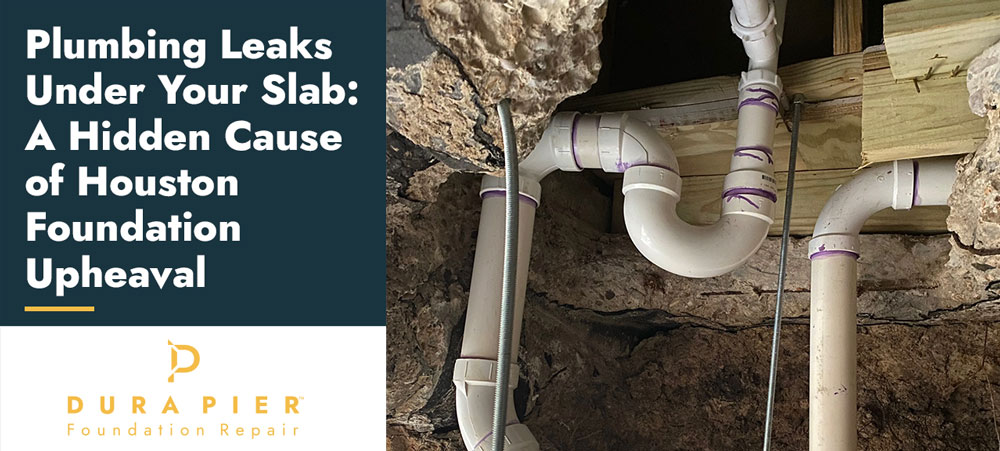
When a Houston home starts showing signs of foundation movement, most homeowners think first about soil, drainage, or seasonal weather changes. Those are common causes, but there is another problem that often goes unnoticed for a long time, plumbing leaks under the slab.
A hidden leak beneath your foundation can soften the soil, wash away support, and create enough moisture imbalance to cause shifting, cracking, or upheaval. Because the damage happens below the surface, homeowners may not realize plumbing is the real issue until visible foundation symptoms begin to appear.
Why slab leaks are such a problem
Your foundation depends on stable soil support. When a pipe leaks below the slab, water can seep into the soil and change the way that soil behaves. In Houston, where clay soil already expands and contracts with moisture changes, that added water can create even more movement.
A slab leak can cause:
- Soil to become too soft to support the foundation properly.
- Uneven settlement in one section of the home.
- Pressure changes that lead to cracks and floor movement.
- Ongoing moisture problems that worsen over time.
Even a slow leak can create a big problem if it goes undetected for months or years.
Warning signs of a plumbing leak under the slab
Slab leaks do not always show up as obvious puddles. Many homeowners first notice foundation symptoms before they suspect plumbing. Common warning signs include:
- Sudden or growing cracks in drywall or brick.
- Floors that feel uneven or start to slope.
- Doors and windows that stick.
- Warm spots on the floor.
- Unexplained increases in water bills.
- The sound of running water when fixtures are off.
- Damp or unusually soft spots in the flooring.
- Musty odors near certain rooms.
If you notice several of these signs at once, a slab leak may be part of the problem.
How slab leaks affect Houston foundations
Houston’s soil is especially sensitive to changes in moisture. When water leaks under the slab, one area may swell while another remains dry. That uneven moisture balance can cause the foundation to shift, lift, or settle in different directions.
This can lead to:
- Interior cracks in walls or ceilings.
- Exterior brick cracks.
- Sloping or uneven floors.
- Gaps around windows, trim, and baseboards.
- Sections of the foundation that appear to move differently from others.
In some homes, the effect is gradual. In others, the movement becomes obvious quickly, especially if the leak is severe. Contact our Houston foundation repair experts today for a free evaluation of the problem.
Why plumbing leaks are often overlooked
Slab leaks are hard to detect because the problem is hidden underground or inside the slab. By the time homeowners notice visible damage, the leak may have already affected the foundation.
They are often overlooked because:
- The leak is not visible from inside the home.
- Foundation symptoms may look like normal settling at first.
- The damage can happen slowly over time.
- The issue may come and go depending on moisture levels.
That is why it is important not to ignore new cracks, floor changes, or repeated plumbing issues.
How to tell if plumbing may be the cause
It can be hard to know whether foundation movement is being caused by soil alone or by a leak under the slab. In many cases, the answer depends on patterns.
Plumbing may be the cause if:
- One area of the home is affected more than others.
- Foundation issues appear near bathrooms, kitchens, or laundry areas.
- Water bills suddenly increase without explanation.
- You hear water running when nothing is in use.
- Moisture or warmth appears in isolated floor sections.
A professional inspection can help determine whether plumbing, soil movement, or both are contributing to the issue.
What homeowners should do next
If you suspect a slab leak, do not wait for the damage to get worse. Start by documenting the warning signs and checking whether the problem seems to be spreading.
Helpful next steps include:
- Watch for changes in cracks, floors, and doors.
- Review recent water bills for unusual spikes.
- Inspect areas near bathrooms, kitchens, and utility spaces.
- Schedule a plumbing inspection if leak signs are present.
- Schedule a foundation inspection if structural symptoms are visible.
If both plumbing and foundation symptoms exist, both systems may need attention.
Preventing future damage
The best way to reduce the risk of slab-related foundation damage is to catch plumbing leaks early. Regular inspections, quick leak repairs, and good drainage around the home can all help reduce stress on the foundation.
Homeowners should also pay attention to:
- Sudden pressure changes in plumbing.
- Recurring leaks in the same area.
- Old pipes that may be near the end of their lifespan.
- Foundation cracks that return after repair.
If you suspect a leak
If you think plumbing leaks under your slab may be affecting your Houston foundation, contact Dura Pier Foundation Repair in Houston to schedule an inspection and find out what is really happening beneath your home.