
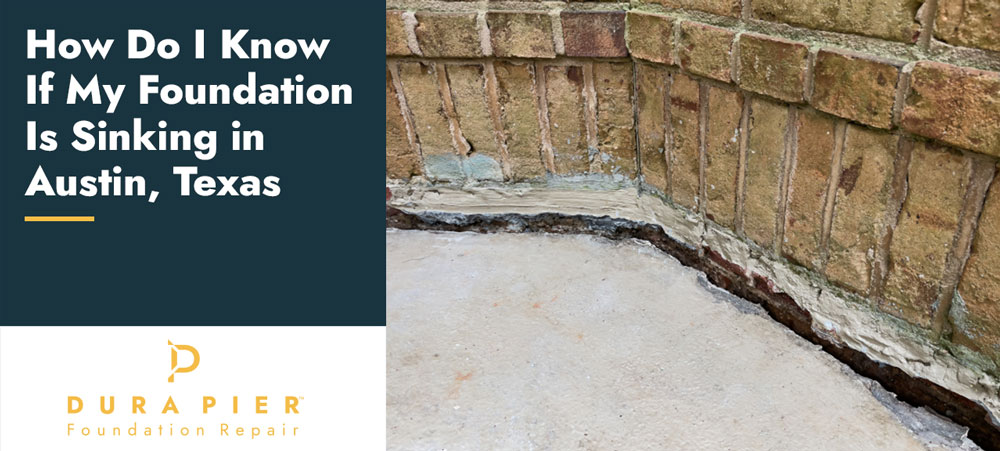
If you’re wondering how to tell whether your foundation is sinking in Austin, Texas, the best place to start is by looking for changes in your floors, walls, doors, and windows. In Austin, foundation movement is often linked to expansive clay soil that shrinks during dry weather and swells when moisture returns, which can cause parts of a home to settle unevenly.
Not every crack or sticking door means you have a serious foundation problem. But if you notice several warning signs at once, or if the issue seems to be getting worse over time, it may be time to schedule a professional inspection by a Austin foundation repair company like Dura Pier.
Why foundations sink in Austin
Austin homes are especially vulnerable to foundation movement because of the region’s expansive clay soil. When the soil dries out, it contracts and can leave voids beneath the foundation. When moisture returns, the soil expands again, which can create uneven movement and settlement.
Long dry periods, poor drainage, plumbing leaks, and large trees near the home can all make the problem worse. In many cases, the foundation does not sink all at once. Instead, one area begins to move more than another, creating a visible slope or unevenness inside the home.
Signs your foundation may be sinking
One of the most common signs is a floor that feels uneven or sloped. You may notice that a ball rolls on its own across the floor, or that one side of the house feels slightly lower than the other.
Other warning signs include:
- Cracks in walls or ceilings that seem to grow over time.
- Doors that stick, drag, or will not latch properly.
- Windows that are harder to open or close.
- Gaps between walls and ceilings.
- Separation around trim, crown molding, or baseboards.
- Stair-step cracks in brick or masonry.
- Plumbing issues that appear without another clear cause.
A single small crack may not mean much on its own. But when several of these signs appear together, they can point to active settlement or foundation movement.
What sinking usually looks like
A sinking foundation usually does not affect the entire house evenly. More often, one section settles faster than the rest, which creates an unlevel floor or visible separation in certain areas of the home.
You might notice that a bedroom door suddenly rubs at the top, a hallway floor feels off balance, or cracks keep returning after you patch them. These are all signs that the foundation may still be moving.
When it becomes serious
Foundation issues become more serious when the symptoms are getting worse instead of staying stable. If cracks are widening, floors are becoming more uneven, or doors and windows are no longer functioning normally, the problem should be checked soon.
You should not ignore signs like:
- Cracks wider than 1/4 inch.
- Noticeable floor slope.
- Separation between walls and ceilings.
- Multiple symptoms happening at the same time.
- Visible movement or separation on the exterior of the home.
The earlier you catch foundation movement, the easier it is to determine whether it is a minor issue or something that requires foundation settlement repair in Austin.
What is normal in Austin?
Some small cracks and minor movement can happen in Austin homes, especially during periods of extreme heat or drought. In many cases, this is part of normal seasonal settling.
The difference is whether the signs remain stable or continue to worsen. If the problem keeps growing, it is less likely to be harmless settling and more likely to be active foundation movement.
What to do if you think your foundation is sinking
Start by documenting what you see. Take photos of cracks, note where doors and windows are sticking, and check whether the floors feel uneven in certain rooms. If possible, compare the condition over time so you can tell whether the issue is changing.
If you see several warning signs, schedule a professional foundation inspection. A qualified contractor can determine whether the home is dealing with normal settling, soil movement, drainage problems, or a more serious structural issue.
How to help prevent future movement
The best way to reduce foundation movement is to keep moisture levels around the home as consistent as possible. Good drainage, properly working gutters, and correct grading can all help protect the soil around the foundation.
It is also important to fix plumbing leaks quickly and avoid allowing trees or shrubs to remove too much moisture from the soil near the home. In Austin, moisture management plays a major role in foundation stability.
FAQ
How do I know if my foundation is sinking or just settling?
If the signs are minor and stable, it may be normal settling. If the cracks, floor slope, or sticking doors are getting worse, the foundation may be sinking.
What are the first signs of a sinking foundation?
The first signs are often sloping floors, small cracks in drywall, doors that stick, and windows that become harder to operate.
Is foundation sinking common in Austin?
Yes. Austin’s expansive clay soil and frequent dry conditions make foundation movement more common than in many other areas.
If you live in Austin and think your foundation may be sinking, the safest next step is a professional inspection. Dura Pier Foundation Repair in Austin can help you identify the cause of the problem and recommend the right solution before it leads to more costly damage.