
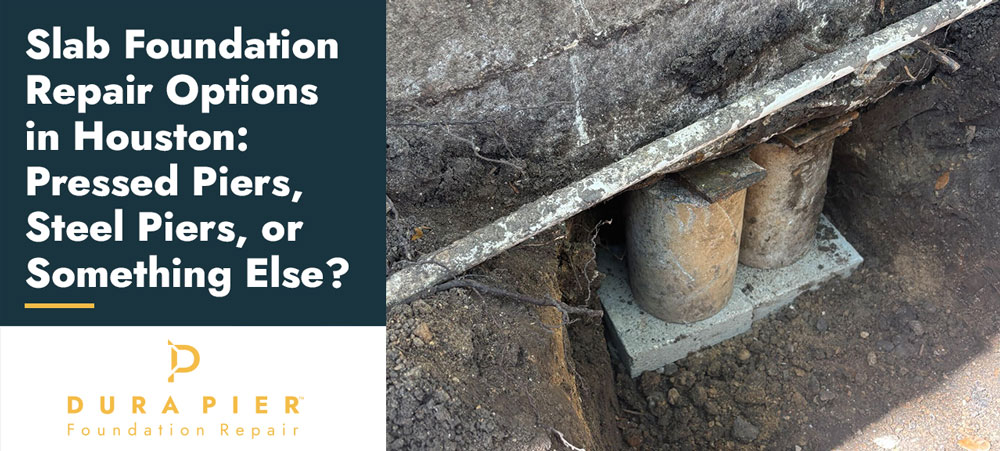
If you own a slab foundation home in Houston, you may eventually hear terms like pressed piers, steel piers, slab leveling, or foundation stabilization. These repair methods are not interchangeable, and the right solution depends on the soil conditions, the amount of movement, and the type of damage your home has experienced.
Houston’s soil and moisture conditions make slab movement a common issue. That is why it helps to understand the most common repair options before choosing a contractor or approving a repair plan.
Why slab foundations move in Houston
Houston’s clay-rich soil expands when wet and shrinks when dry. That constant movement puts pressure on slab foundations and can cause settling, cracks, and uneven floors.
Common contributing factors include:
- Drought and dry soil conditions.
- Heavy rain followed by rapid soil expansion.
- Poor drainage around the home.
- Plumbing leaks beneath the slab.
- Long-term soil instability.
Once the foundation starts moving, the repair method should match the cause and the severity of the damage.
Pressed piers
Pressed piers are a common repair option for slab foundations in Houston. They are typically driven into the ground beneath the foundation until they reach a more stable layer of soil.
Pros of pressed piers
- Often used for moderate foundation settlement.
- Can help stabilize the home.
- May be a more affordable option in some cases.
Cons of pressed piers
- Not always ideal for deeper or more severe settlement.
- Performance depends on soil conditions.
- May not be the best choice for every home.
Pressed piers can be a good option when the foundation needs support and the soil conditions are suitable for that type of system.
Steel piers
Steel piers are another popular choice, especially when more support is needed. These piers are driven deeper and are often used when the goal is to reach more stable soil or bedrock.
Pros of steel piers
- Often considered stronger and more durable.
- Can reach deeper, more stable support.
- Good for more severe settlement in some cases.
Cons of steel piers
- Can cost more than other methods.
- Installation may be more involved.
- Not every foundation needs this level of repair.
Steel piers are often recommended when the home has significant settlement or when deeper support is needed.
Other possible repair methods
Not every slab repair requires piers. Some homes may benefit from other solutions depending on the issue.
Other options may include:
- Foam or mudjacking for limited lifting.
- Drainage correction.
- Soil moisture management.
- Plumbing leak repair.
- Cosmetic crack repair after stabilization.
In many cases, the best repair plan uses more than one solution. For example, a home may need both piers and drainage correction to prevent future movement.
How to choose the right option
The best slab repair method depends on what is causing the movement. A good inspection should consider:
- How much the foundation has shifted.
- Whether the settlement is ongoing.
- Soil conditions under the home.
- Drainage around the property.
- Whether plumbing leaks are present.
A contractor should explain why one option is better than another instead of simply offering the cheapest or fastest fix.
Questions to ask before you repair
Before approving slab foundation repair, ask:
- What caused the movement?
- Why are you recommending this method?
- Will this stop future settlement?
- What does the warranty cover?
- How long will the repair take?
- Will I get the findings in writing?
These questions help you understand the long-term value of the repair, not just the upfront price.
If your Houston slab foundation is showing signs of movement, contact Dura Pier Foundation Repair to schedule an inspection and learn which repair method is right for your home.