
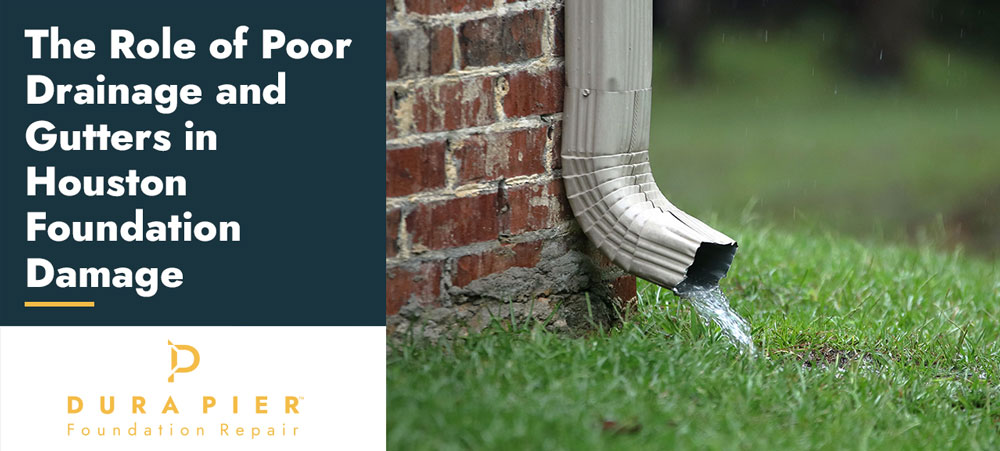
Houston homeowners deal with a lot of moisture, and that moisture can create serious problems when water is not directed away from the home properly. Poor drainage and failing gutters are two of the most common reasons foundations start to shift, settle, or crack over time.
In Houston, where heavy rain, clay soil, and flat lots are common, drainage problems can quickly lead to foundation movement. Water that pools near the home can soften the soil, create uneven support, and put stress on the slab or pier-and-beam system. Over time, that can lead to cracks, sticking doors, sloping floors, and other warning signs.
Why drainage matters so much
A foundation depends on stable soil underneath it. When too much water builds up around the house, the soil can expand, erode, or become unstable. When the soil later dries out, it can shrink and leave gaps under the foundation.
That cycle of too much water and then too little water is one of the biggest reasons Houston foundations move.
How gutters affect your foundation
Gutters are designed to collect rainwater from the roof and move it away from the house. When gutters are missing, clogged, undersized, or damaged, water often falls right next to the foundation instead of being carried away.
That creates several problems:
- Water saturates the soil around the slab.
- Soil expands and puts pressure on the foundation.
- Water can pool and seep into weak spots.
- Repeated wetting and drying cause uneven movement.
Even a small gutter issue can become a big foundation issue if it is left unresolved.
Common drainage problems around Houston homes
Houston homes often experience drainage issues because of flat grading, heavy storms, and soil that does not always drain well. Some of the most common problems include:
- Downspouts that empty too close to the house.
- Clogged gutters that overflow during storms.
- Yard grading that slopes toward the foundation.
- Low spots where water collects after rain.
- Broken or disconnected drain lines.
- Poorly maintained French drains or surface drains.
If more than one of these issues exists at the same time, the risk to the foundation increases significantly.
Warning signs of drainage-related foundation damage
Poor drainage does not always show up immediately, but the damage eventually becomes visible. Homeowners should watch for:
- Cracks in drywall, brick, or ceilings.
- Doors and windows that stick.
- Uneven or sloping floors.
- Gaps around trim, baseboards, or exterior walls.
- Water pooling near the foundation after rain.
- Soil pulling away from the edge of the slab during dry periods.
If you notice these signs after a storm or during seasonal changes, drainage may be contributing to the problem.
How to reduce the risk
The good news is that many drainage-related problems can be improved before major foundation repairs are needed. A few basic maintenance steps can make a big difference.
- Clean gutters regularly.
- Extend downspouts away from the home.
- Keep soil graded to slope away from the foundation.
- Repair broken drains or clogged runoff areas.
- Watch for plumbing leaks that add extra water to the soil.
- Fix standing water problems in the yard quickly.
These steps will not fix an already damaged foundation, but they can help prevent the problem from getting worse.
When to call a foundation expert
If your home already has cracks, sloping floors, or repeated drainage issues, it is smart to get a foundation inspection. A professional can tell you whether the movement is caused by moisture, soil shifting, or a deeper structural issue.
The earlier you act, the easier it is to correct the problem and protect your home from more expensive repairs.
Call today for an inspection
If you suspect poor drainage or gutter problems are affecting your Houston foundation, contact Dura Pier Foundation Repair to schedule an inspection and get a clear recommendation for your home.