
Foundation problems can start small, but they usually do not stay small for long. In San Antonio, where expansive soils and shifting moisture levels can place stress on a home’s foundation, early warning signs should never be ignored.
If you catch foundation issues early, you may be able to limit the damage and avoid more expensive repairs later. If you spot any of these foundation problems, be sure to contact a foundation repair company in San Antonio, like Dura Pier Foundation Repair for a free estimate.
1. Cracks in drywall
Small cracks in drywall are common in many homes, but cracks that keep coming back, widen over time, or appear in multiple rooms can point to foundation movement. Pay close attention to cracks near doors, windows, and ceilings.
2. Sticking doors
Doors that suddenly stick, drag, or no longer latch properly may mean the frame has shifted. When a foundation moves, it can throw off door alignment throughout the house.
3. Hard-to-open windows
Windows that used to open easily but now stick or jam can be another sign of structural movement. This often happens when the frame is no longer square because of foundation settlement.
4. Sloping or uneven floors
If a floor feels slanted, bouncy, or noticeably uneven, that is a strong warning sign. In some homes, you may even notice objects rolling on their own across the floor.
5. Cracks in brick or exterior masonry
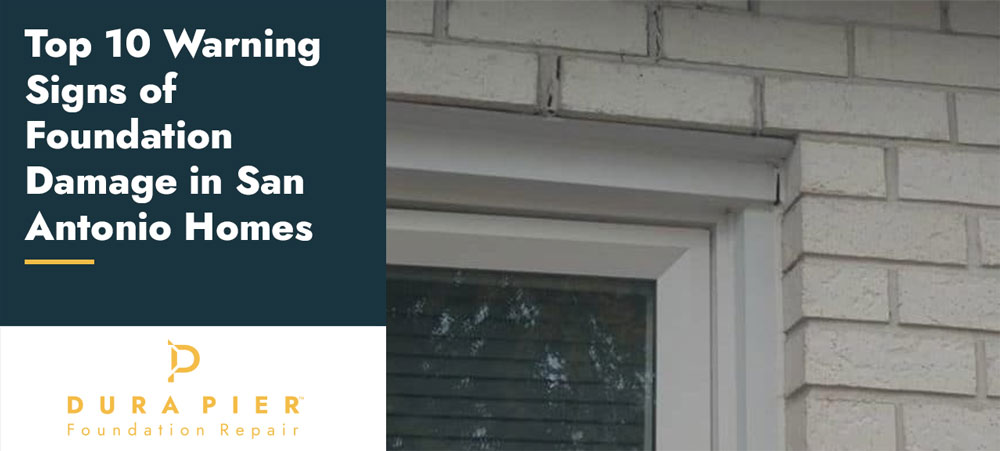
Stair-step cracks in brick are often a red flag. These cracks can indicate that one part of the foundation is settling differently than the rest of the structure.
6. Gaps around trim or molding
Separation between walls and trim, crown molding, or baseboards can point to movement in the home. These gaps may start small, but they often get larger if the foundation problem continues.
7. Ceiling cracks
Cracks in the ceiling, especially if they reappear after being patched, can suggest shifting in the structure below. These cracks are worth inspecting if they are paired with other warning signs.
8. Cabinets or countertops pulling away from walls
If kitchen cabinets, countertops, or built-ins appear to separate from the wall, the structure may be shifting. This can happen when parts of the foundation move at different rates.
9. Exterior gaps or separation
Walk around the outside of your home and look for gaps between the soil and the foundation, separation in siding, or cracks around windows and exterior openings. These can all be clues that the foundation is moving.
10. Repeated plumbing problems
Foundation movement can put stress on plumbing lines. If you are dealing with repeated leaks, slow drains, or unexplained plumbing issues, the foundation may be part of the problem.
Why San Antonio homes are vulnerable
San Antonio homes are often built on expansive soil that expands when wet and contracts when dry. That constant movement can place a lot of pressure on a home’s foundation over time.
Heavy rain followed by dry spells can make the problem worse. As the soil shifts, it can create uneven support beneath the home, leading to settlement, cracks, and other visible warning signs.
When to call for an inspection
If you notice one small issue, it may not be urgent. But if you see multiple warning signs at once, or if the symptoms are getting worse, it is time to schedule a professional foundation inspection.
A qualified San Antonio foundation repair contractor can determine whether the issue is minor settling or active foundation damage. The earlier you catch the problem, the more options you usually have.
If You Suspect Foundation Damage
If your San Antonio home is showing signs of foundation damage, do not wait for the problem to get worse. Contact Dura Pier Foundation Repair today to schedule an inspection and get a professional evaluation of your home’s condition.