
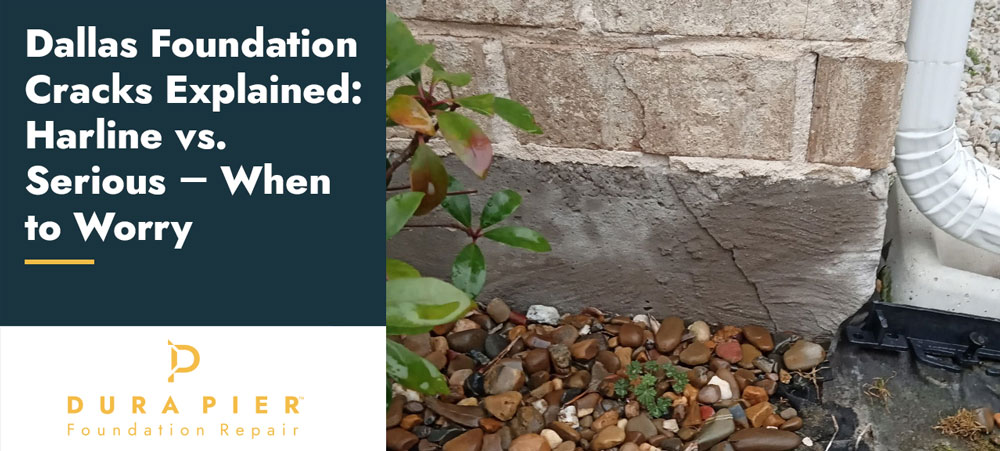
If you have noticed cracks in your Dallas foundation, the first question is usually whether they are harmless or a sign of a bigger problem. In many homes, hairline cracks are common and may simply be part of normal concrete curing or minor settling, but larger, diagonal, stair-step, or widening cracks can point to foundation movement that should be checked by a professional.
Dallas homes are especially prone to foundation issues because of expansive clay soil, which expands when wet and shrinks during dry weather. That constant soil movement can create stress on the foundation and lead to cracks that get worse over time if the underlying issue is not addressed.
What hairline cracks usually mean
Hairline cracks are very thin cracks that often appear as concrete cures and shrinks. They are common in both new and older homes and are often cosmetic rather than structural.
In many cases, hairline cracks do not signal an immediate problem. The key is to monitor them and watch for changes in width, length, or moisture intrusion.
What serious cracks look like
Serious foundation cracks are usually wider, longer, or more active than simple hairline cracks. Cracks that are diagonal, stair-step, or horizontal are more concerning because they can indicate uneven settling or pressure against the foundation wall.
Cracks that are wider than about 1/4 inch, keep growing, or appear alongside other warning signs should be taken seriously. If a crack is changing over time, that matters more than the crack’s size alone.
Types of cracks to watch
Vertical cracks
Vertical cracks are often less serious than other types, especially if they are thin and stable. They can happen as a home settles or as concrete shrinks during curing.
A vertical crack becomes more concerning if it widens at one end, appears in multiple places, or keeps getting larger over time.
Diagonal cracks
Diagonal cracks are more concerning because they often point to uneven settlement. In Dallas homes, this can happen when one area of the foundation moves more than another because of soil expansion and contraction.
If a diagonal crack is widening or paired with sticking doors, uneven floors, or wall separation, it should be evaluated soon.
Horizontal cracks
Horizontal cracks are among the most serious foundation cracks. They can indicate pressure pushing against the wall and may be a sign of structural stress or wall movement.
If you see a horizontal crack, especially with bowing or leaning walls, do not wait to have it inspected.
Stair-step cracks
Stair-step cracks in brick or block walls often point to foundation movement. These cracks can appear in a stepped pattern and may be a sign that part of the home is settling unevenly.
If the crack is growing or appears with gaps around windows, doors, or trim, it should be treated as a warning sign rather than a cosmetic issue.
Other signs the crack may be serious
Foundation cracks become more concerning when they show up with other symptoms. Sticking doors, uneven floors, gaps at trim, cracked drywall, and separating brick joints can all suggest that the foundation is actively moving.
Outside the home, look for pooling water near the foundation, gaps between the soil and the slab, or visible separation in brickwork. These clues often help confirm that the crack is related to real movement rather than normal surface shrinkage.
When to worry
You should worry about a foundation crack if it is widening, lengthening, or appearing alongside other signs of settlement. Cracks wider than 1/4 inch, horizontal cracks, and diagonal cracks are especially worth paying attention to.
If the crack has changed since you first noticed it, that is a strong reason to have it inspected. A stable hairline crack is usually less urgent than a crack that is actively progressing.
What to do next
Start by taking photos of the crack and measuring its width. Check it again after a few weeks or months to see whether it is changing.
If the crack is wide, growing, horizontal, or paired with other symptoms, schedule a professional foundation inspection. A qualified contractor can tell you whether you are dealing with normal settling or a more serious structural issue.
FAQ
Are hairline foundation cracks normal in Dallas?
Yes. Hairline cracks are common and are often caused by concrete curing, shrinkage, or minor settling.
What foundation cracks are most serious?
Horizontal cracks are generally the most serious, followed by diagonal and stair-step cracks that continue to grow.
How wide is too wide for a foundation crack?
Cracks wider than about 1/4 inch are more concerning and should be evaluated by a professional.
If you have noticed cracks in your Dallas foundation and you are not sure whether they are harmless or serious, do not guess. Contact Dura Pier Foundation Repair to schedule a professional inspection and get a clear answer before the problem gets worse.