
If your North Texas home was built before the 1970s, there’s a good chance it’s sitting on a pier and beam foundation. And while these foundations have served generations of homeowners well, they come with their own set of vulnerabilities—especially in a region where the soil never seems to make up its mind.
The problem isn’t that pier and beam foundations are inherently flawed. It’s that the warning signs of trouble are easy to dismiss or misattribute. A squeaky floorboard gets blamed on the dog. A sticky door gets a quick plane and a coat of paint. Meanwhile, the underlying issue quietly gets worse.
After years of evaluating pier and beam foundations across the Dallas-Fort Worth area, we’ve seen how small, overlooked signs turn into expensive structural repairs. This guide is designed to help North Texas homeowners recognize what’s actually happening beneath their floors—before minor issues become major ones.
Why North Texas Is Hard on Pier and Beam Foundations
To understand pier and beam foundation problems, you first have to understand the ground they’re built on. North Texas sits on some of the most reactive clay soil in the country. This expansive clay—sometimes called “black gumbo” locally—swells when it’s wet and shrinks when it’s dry, sometimes dramatically.
For slab foundations, this constant movement creates pressure from below. For pier and beam foundations, the challenge is different but equally serious: the crawl space environment. The enclosed space beneath a pier and beam home traps moisture, allows wood to rot, and creates conditions where piers can shift and beams can sag.
North Texas adds several compounding factors:
- Extreme seasonal swings – Summers regularly exceed 100°F, while winter freezes can arrive suddenly. These temperature extremes stress both the soil and the structural wood components of your foundation.
- Drought and flash flooding cycles – Extended dry periods cause soil to shrink and pull away from piers. Then heavy rains saturate the crawl space and the surrounding soil, creating entirely different pressure dynamics.
- High humidity in crawl spaces – Even without flooding, North Texas humidity levels can create persistently damp conditions underneath your home, accelerating wood decay.
- Tree root intrusion – The region’s many mature trees—post oaks, pecans, and cedars—send roots in search of moisture, and they’re not shy about finding it under your foundation.
Understanding these regional factors matters because they explain why certain warning signs appear—and why timing often makes the difference between a manageable repair and a significant structural overhaul.
How Pier and Beam Foundations Work (And Where They Fail)
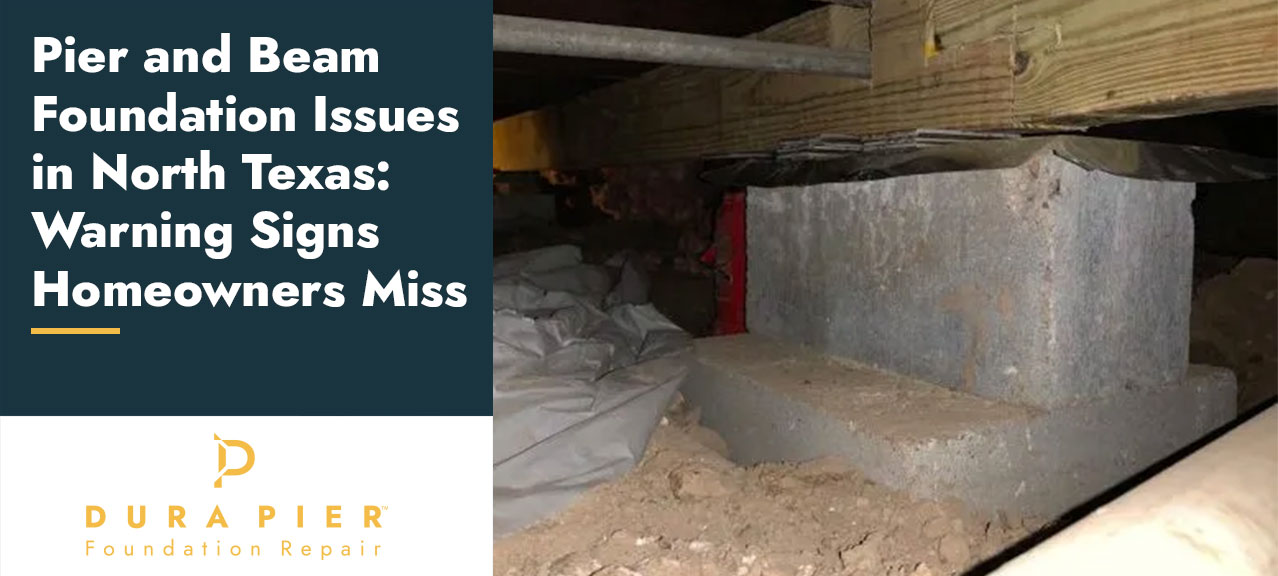
A pier and beam foundation elevates your home above grade using a system of concrete or wood piers, horizontal beams (also called sills or girders), and floor joists. The crawl space between the ground and your floor system allows for airflow and provides access to plumbing and electrical systems.
When everything is working correctly, the piers distribute the weight of your home evenly into the ground, and the beams and joists carry the load across the structure. Problems occur when any part of that system is compromised.
The most common failure points include:
- Individual piers that settle, shift, or deteriorate
- Beams and sills that rot due to chronic moisture exposure
- Joists that weaken from wood rot, insect damage, or age
- Center beams that sag over time as supporting piers lose contact with the soil
- Moisture barriers that fail, allowing ground moisture to saturate wood components
What makes pier and beam problems deceptive is that they rarely announce themselves dramatically. Instead, they show up as a collection of subtle symptoms that homeowners often chalk up to “old house character.”
Warning Signs Homeowners Miss (And Shouldn’t)
Floors That Bounce, Sag, or Feel Uneven
This is probably the most common sign we see—and the most frequently dismissed. Homeowners assume bouncy floors are just a quirk of older construction. Sometimes that’s true. But a floor that has developed new bounciness, that has started to slope noticeably, or that feels soft in specific areas is telling you something specific: the structural support beneath it has changed.
Pay attention to:
- Areas that feel springy underfoot that didn’t used to
- Visible dips or high spots in the floor surface
- Floors that slope toward one side of a room
- A feeling of “giving” when you walk across certain spots
A sagging center beam is one of the most common culprits in North Texas pier and beam homes. As the supporting pier loses contact with the soil—or as the beam itself softens from moisture—the middle of the floor drops while the perimeter stays in place. The result is a subtle but measurable slope toward the center of the home.
Doors and Windows That Stick, Bind, or Gap
When your foundation moves, the frame of your home moves with it. Doors and windows are particularly sensitive to this because they’re installed within precise clearances. When the frame shifts even a small amount, those clearances tighten—or open up entirely.
Watch for:
- Interior doors that have started sticking seasonally—especially in summer or after heavy rains
- Doors that no longer latch without lifting the handle
- Gaps that appear at the top corner of a door frame
- Windows that are suddenly difficult to open or close
- Doors that swing open or drift closed on their own (indicating the frame is no longer plumb)
Seasonal sticking can sometimes be attributed to humidity-related wood expansion. But if a door sticks consistently, or if it’s gotten progressively worse over time, the issue is more likely structural movement.
Gaps Between Walls and Floors (or Ceilings)
Pier and beam homes settle unevenly. When one section of the foundation drops while another remains stable, the walls—which are anchored to the floor system—begin to separate from the surfaces they’re attached to.
Look for:
- Visible gaps where interior walls meet the floor
- Separation at the ceiling line, particularly in the center of the home
- Baseboards that have pulled away from the wall
- Crown molding that has separated from the ceiling
- Gaps around door or window casings
Small gaps that have remained stable for years are often just normal settling. Gaps that are new, growing, or asymmetrical are a different story. If you notice a gap on one side of a room but not the other, that’s a clear sign of differential movement.
Cracks in Interior Drywall or Plaster
Interior wall cracks are one of the most misread signs in any foundation conversation. Not all cracks are serious—but some patterns are hard to ignore.
Minor cracks that require monitoring:
- Hairline cracks in drywall that have been stable for years
- Small cracks at inside corners that don’t grow
- Nail pops that aren’t accompanied by other symptoms
Cracks that warrant a professional evaluation:
- Diagonal cracks running from the corners of door or window frames at 45° angles
- Cracks that are wider at one end than the other
- Cracks that have returned after being patched
- Horizontal cracks in plaster walls
- Multiple cracks appearing in the same area simultaneously
In pier and beam homes specifically, diagonal cracks radiating from door corners often indicate that the floor system has dropped in one area, causing the wall framing to rack.
Musty Odors or Visible Moisture in the Crawl Space
One of the advantages of pier and beam construction is crawl space access. One of its vulnerabilities is crawl space moisture. The ground beneath your home is a constant source of evaporation, and without proper ventilation and vapor barriers, that moisture has nowhere to go except into your floor system.
Signs of crawl space moisture problems:
- A persistent musty or earthy smell in rooms that are close to the floor level
- Humidity that feels higher indoors than outdoors
- Visible condensation on ductwork or pipes running through the crawl space
- Standing water or consistently damp soil beneath the home
- Mold or mildew on wood structural components
Moisture in the crawl space is both a symptom and a cause. It can result from poor drainage around the foundation, inadequate ventilation, or a compromised vapor barrier. Left unaddressed, it accelerates wood rot, attracts termites, and weakens the structural components your home depends on.
Squeaking, Creaking, or Popping Floors
Yes, old houses creak. But there’s a difference between the kind of occasional squeak that’s always been there and the kind that signals structural change.
New squeaking that develops over a short period of time—especially when accompanied by other symptoms like bouncy floors or sticking doors—often means that floor joists or beams have shifted enough that they’re no longer making solid contact with their supports. The squeak is the sound of wood moving against wood (or against nothing at all) where it didn’t before.
Plumbing Problems That Keep Coming Back
Because pier and beam homes have plumbing running through the crawl space—rather than embedded in a slab—foundation movement often affects pipes directly. Joints can work loose. Drain lines can lose their proper slope. Pipes that were properly supported can be left hanging in mid-air as the structure shifts.
Pay attention if you notice:
- Slow drains throughout the house (not just one fixture)
- Recurring clogs that aren’t explained by what’s been put down the drain
- Gurgling sounds in drains
- Unexplained moisture or mold beneath sinks on the ground floor
- Water pressure changes that don’t have a clear explanation
Plumbing problems alone don’t confirm a foundation issue, but when they’re paired with other warning signs, they’re a meaningful piece of the picture.
When Multiple Signs Appear Together
Individual symptoms can often be explained away. A sticky door in July might just be humidity. A hairline crack in the drywall might be from the house settling years ago. But when multiple symptoms appear at the same time—or when you notice symptoms that are new and getting worse—that’s when a professional evaluation becomes necessary.
Situations that warrant immediate attention:
- Floors that have developed a noticeable slope over a short period of time
- Multiple doors or windows suddenly sticking at once
- New gaps or cracks appearing rapidly in several areas of the home
- Any combination of musty odors, soft floors, and sticking doors
- Visible sagging or separation in the crawl space structural members
The rate of change matters as much as the severity. A crack that has been stable for 10 years is far less concerning than one that’s doubled in width over the past six months.
Common Pier and Beam Repairs in North Texas
The right repair depends entirely on what’s causing the problem. A general evaluation should identify the root cause—not just treat the symptoms.
Common repair approaches include:
- Pier shimming or replacement – When individual piers have settled or lost contact with the beam above, shimming or replacing them restores level support. In North Texas, concrete pressed piers are commonly used for this purpose.
- Beam and sill replacement – Wood beams that have rotted beyond their load-bearing capacity need to be replaced. This is one area where delaying repairs significantly increases the scope of work.
- Crawl space moisture remediation – Installing or repairing vapor barriers, improving ventilation, and addressing drainage around the foundation perimeter all help control the moisture environment that accelerates wood decay.
- Center beam support – Adding piers or adjustable steel columns beneath a sagging center beam is one of the most effective ways to restore level floors in a pier and beam home.
- Sister joist installation – When joists are weakened but not fully compromised, sister joists—new joists installed alongside the old ones—can restore structural integrity without full replacement.
A proper evaluation should include a crawl space inspection, not just a visual walkthrough of the home’s interior. The story almost always starts underground.
Preventive Steps North Texas Homeowners Can Take
You can’t change the soil, but you can manage the conditions that make it more or less damaging to your foundation.
Effective prevention strategies:
- Maintain consistent soil moisture – During extended dry periods, use a soaker hose around the perimeter of your foundation to prevent extreme shrinkage. During wet periods, make sure water is draining away from the home, not pooling near the piers.
- Keep gutters clean and downspouts extended – Gutters that overflow send large volumes of water against the foundation. Downspouts should direct water at least 4–6 feet away from the home.
- Check and maintain your vapor barrier – The vapor barrier on your crawl space floor prevents ground moisture from rising into the structure. Inspect it annually and repair any tears or gaps.
- Manage trees and large shrubs – Deep-rooted trees near the foundation can both extract moisture from the soil and physically intrude on piers and beams. Consider root barriers for existing trees and choose appropriate species for new plantings.
- Schedule periodic inspections – Many homeowners with pier and beam foundations benefit from a professional crawl space inspection every few years, not just when problems become obvious.
Don’t Wait for an Obvious Problem
Pier and beam foundations don’t usually fail dramatically. They decline gradually—and the warning signs that precede serious damage are exactly the kinds of things that are easy to explain away or put off for later.
The good news is that pier and beam foundations are generally more accessible and more repairable than slab foundations. When problems are caught early, repairs are typically less invasive and less expensive. When they’re left too long, what started as a shimming job can become a full beam replacement.
If you’ve noticed any of the warning signs described here—especially if you’ve noticed more than one—the right move is to have a professional look at the crawl space. We offer free foundation evaluations across the Dallas-Fort Worth and the surrounding areas, and we’ll give you a straight answer about what’s happening and what, if anything, needs to be done about it.
Schedule your free evaluation today.